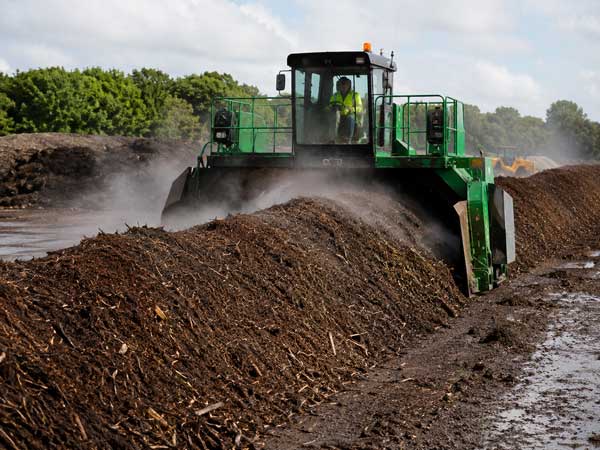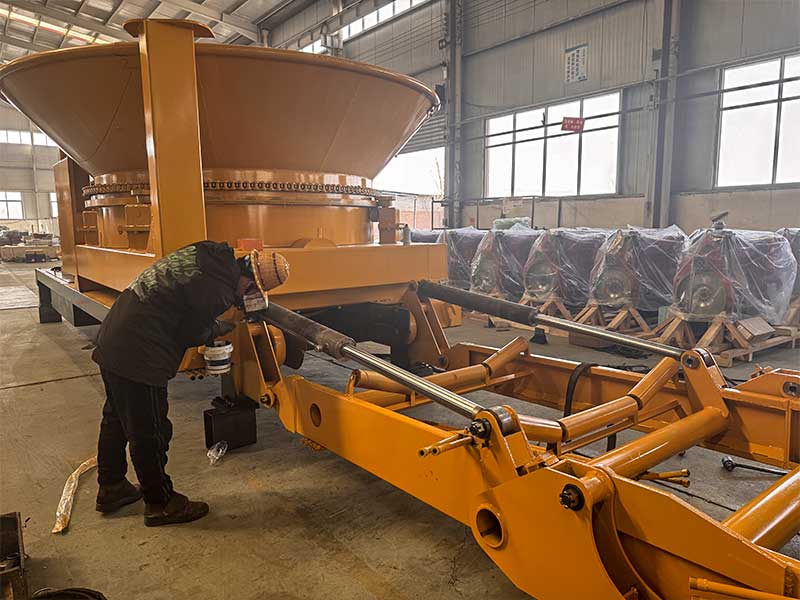
A land-clearing roots tub grinder throughput test must hold feed size, moisture condition, and screen choice under control before comparing results. The purpose is to explain why output changes, not to produce an isolated peak number.
Feed size, moisture condition, and screen configuration can change observed tub grinder throughput for land-clearing roots, but their effects must be tested with controlled, identified batches. An engineering test should not change all three variables at once and then attribute the result to the machine. Use a structured comparison that records accepted output, gross time, productive time, delays, rejects, and particle-size compliance.
This protocol is for engineers and site supervisors. It does not authorize a screen, feed size, or operating setting; the installed manual and approved configuration control the work.
Define the response variables first
Use at least four outputs: net accepted-output rate, gross accepted-output rate, productive utilization, and fraction meeting the written product specification. Also report rejects and reprocessing. A faster run that creates excessive oversize is not necessarily better.
Net rate = accepted output / productive grinding hoursGross rate = accepted output / total elapsed trial hoursUtilization = productive minutes / elapsed minutes
Create root lots before creating test cells
Measure root-ball width, height, attached stem length, visible soil and stone, metal risk, moisture method, storage surface, and preparation. The previous land-clearing root feed-characteristics guide provides the lot record. Do not mix roots, long logs, brush, and demolition wood unless the commercial stream is measured and intentionally defined that way.
Test one factor at a time
| Factor | Controlled comparison | Keep constant |
|---|---|---|
| Feed geometry | Prepared smaller roots versus normal accepted roots | Moisture band, screen, loader, operator, output rule |
| Moisture condition | Identified lots with different measured moisture conditions | Geometry class, screen, loader, output rule |
| Screen configuration | Two approved sizing setups | Representative lot, wear condition, loader, sampling method |
A full factorial test may be useful in a formal program, but a field project often has limited material. Sequential one-factor comparisons are easier to interpret and safer to document. Record any unavoidable change as a limitation.
Feed size: record geometry, not one diameter
Roots are three-dimensional and may hook, roll, or bridge. Record maximum width, height, and attached wood length. Count pieces requiring cutting or orientation, and include that preparation time in the gross result. Observe loader presentation angle, charge size, clearing behavior, and stops. Do not use the loader to force material against moving components.
Moisture: separate wood moisture from retained soil
A wet root ball can gain mass from water and soil without adding useful wood. State whether moisture is measured on prepared woody material, mixed root material, or finished output. Use a named method and repeat sampling across the lot. Report weather and storage duration. Do not compare wet-basis mass results with a dry-basis requirement without an explicit conversion.
U.S. Forest Service research on biomass harvesting air quality and ash describes high ash in some land-clearing and stump-derived material, reinforcing the need to keep soil condition visible in throughput and product records.
Screen choice: measure accepted product
A screen opening is only one sizing variable. Feed geometry, moisture, wear condition, recirculation, and operating method can change the distribution. Define the sampling method before the run. Collect composite samples at several times and report the mass fraction within specification, oversize, fines, and visible contamination.
Use the tub grinder product section for equipment context, but obtain the approved screen and feed limits for the exact configuration.
Time every delay with a common code
- Normal loader gap.
- Feed preparation or orientation.
- Contamination inspection or quarantine.
- Bridge or blockage response.
- Machine inspection or maintenance.
- Discharge or truck delay.
- Relocation or setup.
- External weather or site hold.
The same recorder and threshold should be used for every run. Slow feeding remains part of observed performance; do not stop the clock simply because the rate falls.
Minimum repeatable test sequence
- Confirm the approved feed envelope and isolation procedure.
- Identify and measure at least three comparable batches for each test cell.
- Record machine, screen, wear, loader, and output setup.
- Start one synchronized elapsed-time record.
- Weigh or measure accepted output consistently.
- Sample product at the beginning, middle, and end.
- Calculate each run separately, then report average and range.
- Document exclusions, abnormal events, and limitations.
Safety gate for changes and inspections
Changing a screen, clearing a jam, or entering a danger zone is not part of normal observation. Follow the machine-specific shutdown and energy-control procedure. OSHA’s woodworking lockout/tagout guidance explains why machinery is shut down and locked before maintenance, cleaning, or similar work.
Engineering decision table
| Observed result | Likely next investigation |
|---|---|
| High net rate, low gross rate | Loader, preparation, discharge, or inspection delays |
| Stable rate, poor size acceptance | Screen, wear, feed condition, sampling, reprocessing |
| Variable results within one test cell | Lot definition, moisture, contamination, operator consistency |
| Repeated abnormal stops | Stop trial; review feed envelope, preparation, and machine condition |
Use the commercial site throughput method as a companion for buyer reporting. For engineering review, send lot sheets, moisture method, screen identity, timing records, sample results, and event logs through the contact page.
Use a run acceptance sheet
Before each run, the supervisor should sign a short acceptance sheet containing the root-lot identifier, preparation method, machine and screen configuration, wear observations, loader, operator, weather, and planned sample points. After the run, add start and finish times, accepted output, oversize, rejects, reprocessing, delay codes, and any safety stop. This prevents a later report from silently combining unlike batches.
Photographs should show representative roots beside a scale reference, the prepared feed pile, the discharge setup, and labeled output samples. Record whether output mass is reported as received or on a moisture-corrected basis. If volume is used, document the container and filling method because loose bulk density can change with particle shape and handling.
When a result changes, repeat the baseline before accepting the explanation. A fresh baseline can reveal wear progression, operator learning, a different loader route, or a changed root lot. The final recommendation should name the proven operating window and its exclusions, not imply that one screen and feed method applies to every land-clearing project.