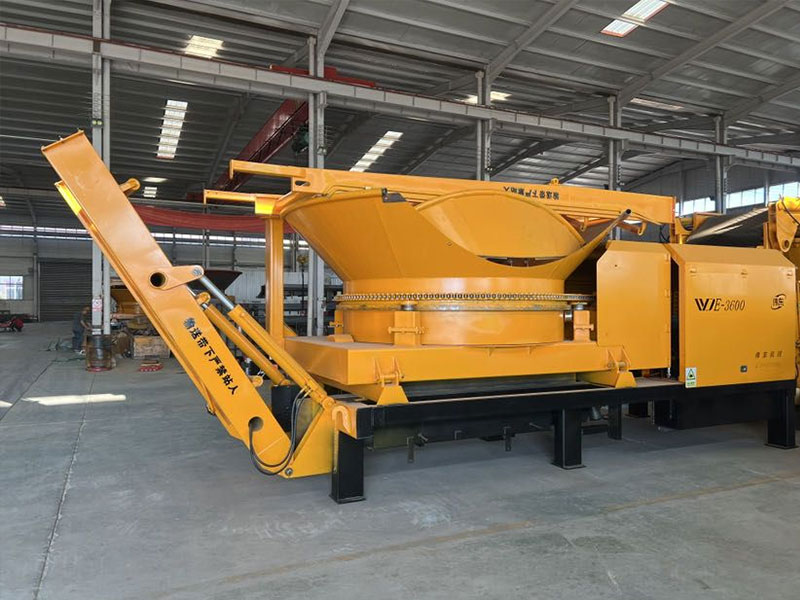
Tub grinder wear parts cost per ton for land-clearing roots: Tub grinder wear parts cost per ton for land-clearing roots should be calculated from inspected component consumption divided by accepted output. It should not be inferred from purchase price or a service-life claim for a different material. Roots vary in retained soil, stones, moisture, geometry, attached wood, and metal risk, so an engineering record must connect every wear observation to an identified feed lot and operating configuration.
Define what the numerator contains
Create a component register covering replaceable hammers or tips, screens, holders, fasteners, belts, conveyor wear items, and any other material-contact part specified for the machine. For each item record opening condition, inspection limit, quantity installed, unit price, replacement labor, and disposal or refurbishment treatment. Use the tub grinder product section for configuration context, then obtain the exact parts list for the proposed model.
Keep routine filters and fuel outside the wear-part numerator if the comparison is specifically about material-contact wear. They belong in total operating cost, but mixing categories makes engineering changes difficult to interpret. State whether tax, freight, technician travel, and inventory carrying cost are included.
Define the accepted-output denominator
Use tonnes of output meeting the written size and contamination rule. Incoming root mass can include soil, moisture, rejects, and material needing another pass. Record all of these streams. The recent root throughput test protocol provides a controlled method for linking lots, screens, samples, and elapsed time.
Calculate wear cost per accepted tonne = consumed wear value / accepted output. If components are only partly consumed, estimate remaining life from a documented measurement method and label the result provisional until a full change interval is observed.
Classify root lots by abrasive exposure
Measure root-ball dimensions, attached stem, visible soil, stones, storage surface, weather, cleaning method, and rejected contamination. Take photographs with scale references. The root feed-characteristics guide can serve as the lot sheet. Do not merge cleaned roots and gritty root balls into one average unless their shares are measured.
U.S. Forest Service research on biomass harvesting and ash documents the relevance of soil contact for processed biomass. Ash is not a direct wear measurement, but visible soil and inorganic contamination are reasons to test abrasive exposure rather than assume clean-wood life.
Measure wear consistently
Choose repeatable inspection points and use the machine manufacturer’s approved measurement method. Record operating hours, productive hours, accepted tonnes, component position, mass or dimensions where permitted, photographs, and the person performing the inspection. Position matters because loading and material flow may not distribute wear evenly.
Do not inspect inside a danger zone while energy is available. Screen changes, jam clearing, and internal inspection require the site and machine-specific energy-control procedure. OSHA’s hazardous-energy standard explains the general requirements for servicing and maintenance where unexpected energization can injure workers.
Allocate labor and stopped time
A parts invoice does not capture the full wear event. Time preparation for shutdown, isolation, cooling, cleaning, inspection, replacement, verification, restart, and housekeeping. Separate planned inspection from unplanned repair. Record the crew size and whether production was otherwise available during the stop.
Convert lost production cautiously: use the accepted gross rate demonstrated for the same root class, not a brochure peak. Report direct labor and opportunity cost separately so the business case remains auditable.
Use cohorts, not one dramatic event
Track several change intervals or comparable component cohorts. A single stone or metal incident should be documented as an abnormal event, while ordinary soil-bearing roots form the normal wear distribution. Report median, range, and material conditions rather than presenting one favorable interval as typical.
When a screen, hammer pattern, feed preparation, operator method, or root class changes, start a new comparison cell. Only change one major variable where possible. If multiple variables change, label the result observational rather than causal.
Convert evidence into a stocking plan
Multiply expected component consumption by the project output, add the approved contingency, and compare the result with supplier lead time. Define minimum and reorder levels for critical parts. Include the tools, lifting method, trained personnel, and inspection instruments required for replacement.
Send the component register, lot records, inspection measurements, accepted-output totals, and event log through the engineering contact page. A commercial companion on root-project budget and ROI can place the wear result inside the full cost model.
Build a representative baseline before forecasting
The team responsible for tub grinder wear parts cost per ton for land-clearing roots should select several identified root lots that represent the expected project, not just the easiest material available on the trial day. For every lot, preserve photographs, dimensions, attached-wood observations, visible soil and stone condition, moisture method, preparation, rejects, loader and machine configuration, screen identity, component condition, operator, productive minutes, total elapsed minutes, accepted output, and sample results. Repeat the baseline when the season, clearing area, storage surface, or outlet changes. This record makes the cost model traceable and prevents a later estimate from combining unlike roots without explanation.
Separate observed values, supplier statements, quotations, and planning assumptions in the worksheet. Give each assumption an owner, evidence source, date, expected range, and trigger for review. Currency, tax, freight, labor burden, fuel or electricity, product value, disposal charges, and parts lead time are local commercial inputs and should be updated from current documents. Do not convert missing data into zero cost. Where direct measurement is unavailable, show a low, expected, and high case and identify which site trial or quotation would narrow the range.
Use change control during the project
Issue a revision whenever the root class, preparation standard, loader, machine configuration, screen, wear condition, discharge arrangement, work cell, shift pattern, outlet specification, or support scope changes. Record the effective time so cost and output data can be assigned to the correct operating window. Compare the new window with a repeated baseline instead of attributing every difference to one visible change. A daily review should reconcile incoming material, rejects, accepted output, operating hours, delay codes, energy or fuel, parts consumption, labor, samples, and abnormal events.
At project close, compare the original estimate with the measured result and explain variance by category. Preserve useful evidence for the next proposal, but do not transfer the final rate to a new site without checking its material, layout, output, and commercial assumptions. This feedback loop improves future budgets while keeping every published number tied to a defined project boundary.
Engineering acceptance rule
Accept a wear allowance only when the feed class, component identity, measurement method, replacement threshold, accepted-output denominator, labor basis, and uncertainty are visible. The resulting range may be less tidy than a universal life claim, but it can be audited, updated, and used to plan parts without pretending every root project is the same.