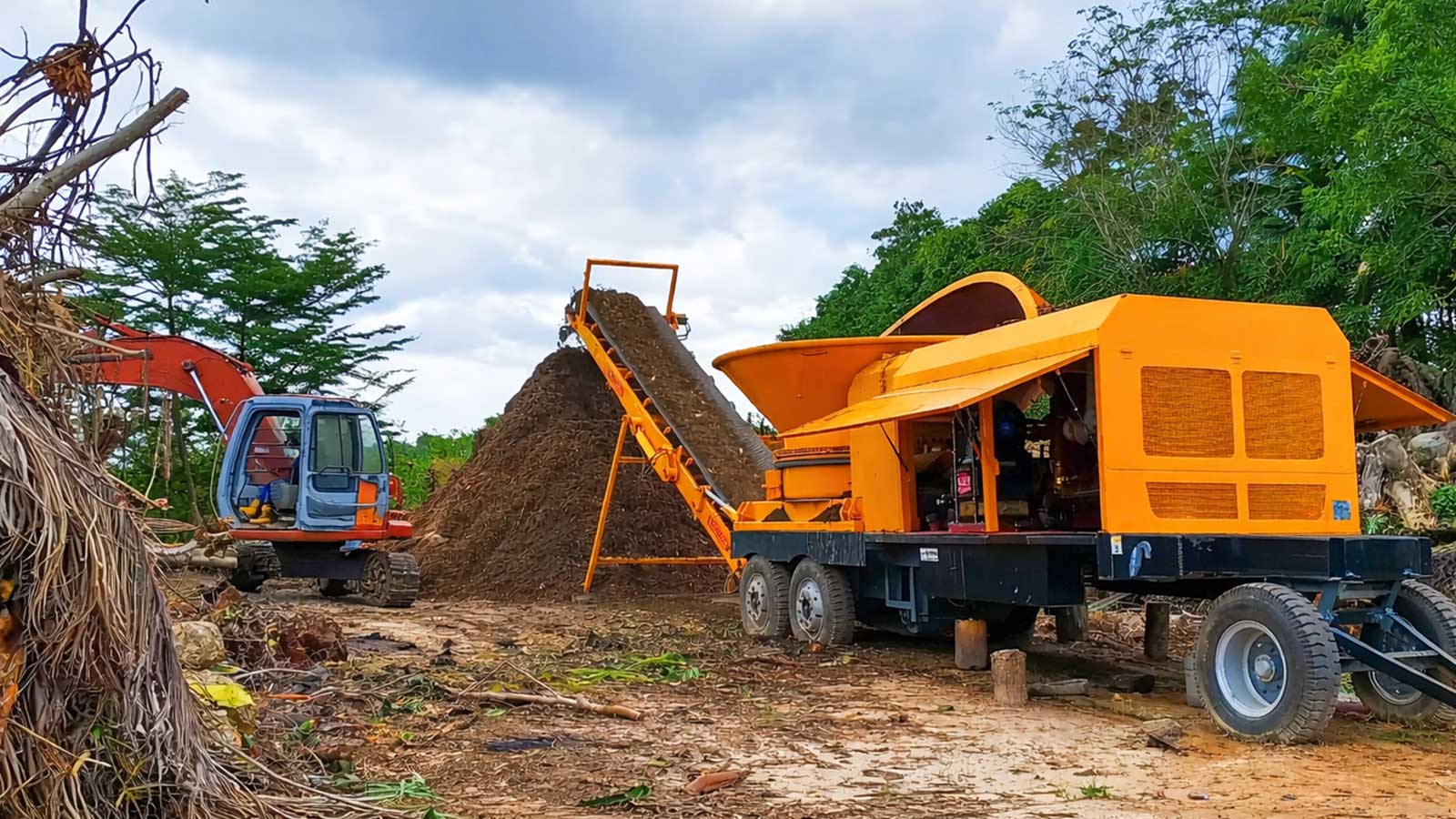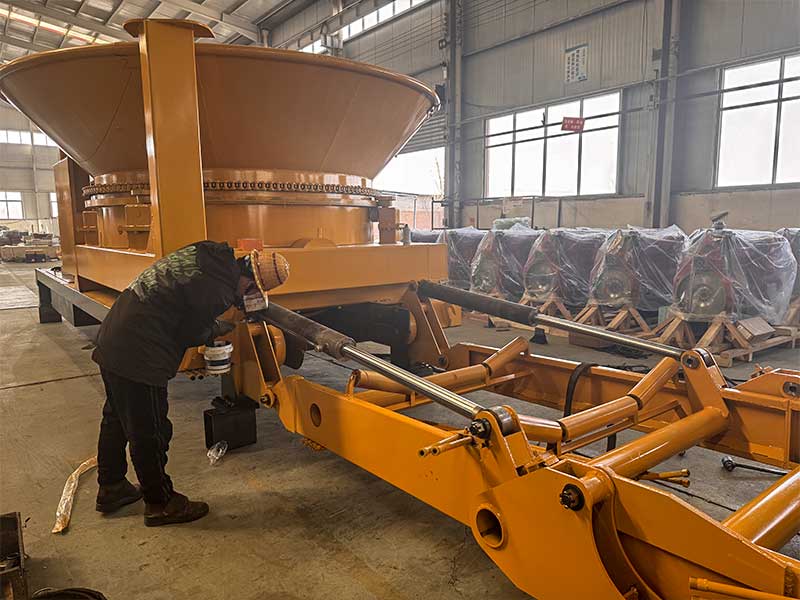
Tub grinder inspection intervals for forestry residue should be set with an interval matrix that combines time, accepted output, material change and condition triggers. A calendar alone misses the variability of municipal pruning, leafy loads, storm debris and mixed drop-off material. This engineering method helps maintenance teams create initial review points without inventing universal service intervals.
Separate observation from maintenance access
Start by listing what an operator may observe externally during normal work and what requires an authorized maintenance state. Noise, vibration, temperature indication, leakage, belt tracking, discharge behavior and output change can be reported without improvising internal access. Inspection behind guards or work near stored energy follows the exact machine procedure and site energy-control program.
Use the tub grinder product section only for configuration context; obtain the current manual for the exact machine. OSHA’s control of hazardous energy standard explains general requirements for servicing where unexpected energization or stored energy can injure workers.
Create five interval types
- Pre-start external checks before an operating window.
- Early-run confirmation after a new lot, screen or setup.
- Shift and lot-change reviews based on accepted output and events.
- Condition-triggered inspections after abnormal observations.
- Scheduled maintenance required by the manufacturer and service plan.
Each row needs an owner, safe state, method, normal reference, action limit and record location. Time and hours can remain useful, but accepted tonnes and event counts provide context when daily operating windows differ.
Classify the green-waste lot before setting frequency
Record source, woody-to-leafy share, representative branch geometry, moisture method, storage, soil, stones, wire, plastic, preparation and loader presentation. The green-waste feed-characteristics worksheet gives a repeatable lot structure. Do not average clean pruning and contaminated public loads into one inspection class.
Add a variability flag when the lot cannot be characterized confidently. An unknown or rapidly changing stream may require an earlier confirmation point and stricter receiving control. That is a risk response, not a claim that a particular component has a fixed life.
Build a measurable baseline
At a clean, authorized condition, identify component positions and approved measurement methods. Record screen identity, relevant dimensions or condition grades, photographs, hours, accepted output and the material class. Use consistent lighting, scale references and labels so later images can be compared rather than merely stored.
The baseline should also capture loader, discharge arrangement, operator and recent events. Compare changes against accepted output using the controlled throughput protocol. A complementary green-waste output and throughput record can help align inspection findings with accepted product. Incoming mass alone can be misleading when rejects, recirculation or off-spec output vary.
Use triggers that lead to defined actions
An interval matrix is useful only when a finding changes the decision. For each observation define continue, review soon, hold feed or escalate. Examples include an unexplained vibration change, abnormal heat, smoke, leakage, loose or missing hardware, belt tracking change, discharge restriction, repeated bridging or unexpected output-size change.
Do not diagnose by guesswork. Stop and secure the process under the approved procedure, preserve the material and configuration record, then allow the responsible role to inspect. Connect repeat events with the receiving and preparation rules instead of normalizing them as unavoidable downtime.
Audit and revise the matrix
At a defined review period, compare missed findings, false alarms, inspection labor, change rates, contamination events and unplanned stops. Shorten a review point when evidence shows a condition can develop between checks. Extend or otherwise revise an interval only through the authorized process and within manufacturer requirements.
Use the wear-part cost ledger to connect condition records with labor and accepted output. Keep abnormal impact events separate from gradual wear so purchasing and maintenance see different causes.
Inspection interval worksheet
Use columns for lot ID, material class, configuration, interval type, trigger, safe state, component or area, method, reading or observation, comparison, action, owner and next review. Preserve the previous revision. Send the completed matrix and representative photographs through the engineering contact page when configuration-specific guidance is required.
Example interval-matrix logic
| Review point | Basis | Decision |
|---|---|---|
| Pre-start | Before the operating window | Release, correct or hold |
| Early run | New lot, setup or screen | Confirm baseline or stop |
| Lot change | Material class changes | Retain or revise frequency |
| Condition trigger | Abnormal observation | Escalate under safe procedure |
| Scheduled work | Manual/service plan | Complete and document |
The table is a structure, not a list of universal intervals. Fill it with manufacturer requirements, site procedures and measured observations. If two components use different methods or action limits, give them separate rows rather than combining them into a vague “machine inspection.”
Control shift handover
At shift change, transfer active lot, configuration, unresolved observations, holds, completed actions and the next required review point. The incoming team should know whether an item is normal, awaiting confirmation or prohibited from operation. Preserve the person and time associated with each decision.
Shift handover matters because inspection evidence can be lost even when the physical machine has not changed. A repeated observation should carry forward until it is resolved or formally reclassified; it should not disappear because a new operator starts work.
Final interval release
Release the matrix only when every row identifies a responsible role, safe state, method, action and record. Mark assumptions and incomplete evidence clearly. The result is not a promise of component life; it is a controlled way to learn from defined green-waste lots while staying inside manufacturer requirements and site procedures.
Review the matrix with operations and maintenance after the first representative runs. Keep the old revision, explain every changed review point and name the evidence used. This creates a defensible inspection history without turning provisional observations into permanent limits.
Use condition and events to change the interval
Forestry residue can shift from clean slash to bark-rich or soil-affected material within one project. Keep the calendar interval as a baseline, then shorten it after contamination, abnormal vibration, heat, bridging, screen changes or a sharp change in wear trend. Only authorized personnel should inspect after the machine is secured under the exact hazardous-energy procedure.
For a mobile work-cell perspective, compare the forestry-residue loading workflow with the inspection record.