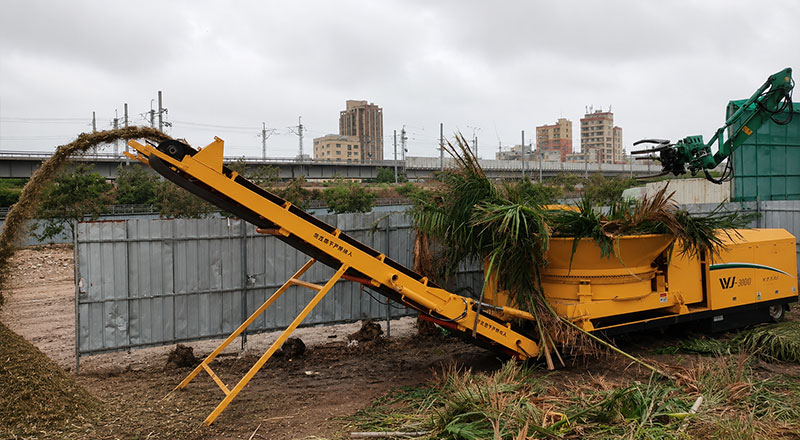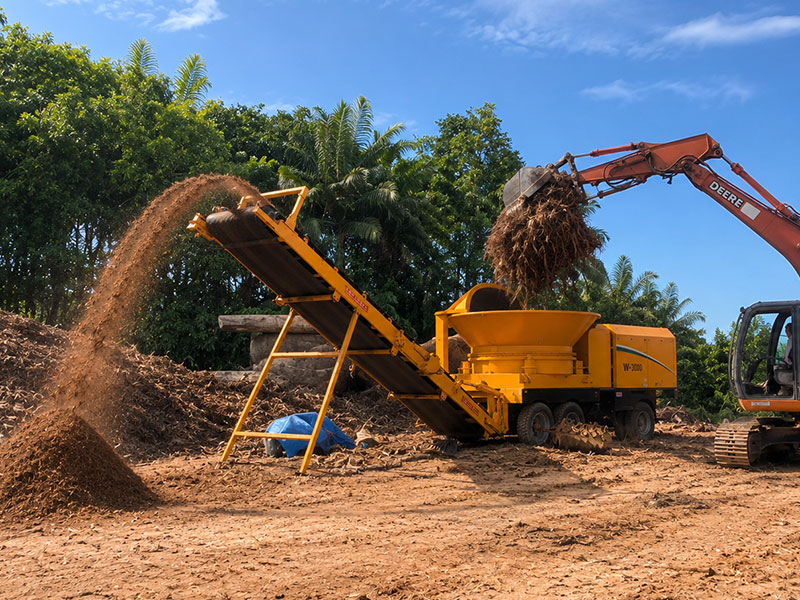
Biomass fuel feed characteristics for tub grinder selection matter because the machine receives a physical mixture, not a simple material name. “Forestry residue” or “green waste” does not define piece geometry, moisture condition, soil contact, contamination, loading behavior, or the receiver’s accepted output. A useful selection process measures those characteristics by representative lot, records the difficult exceptions, and connects them to feeding, sizing, wear, safety, and downstream handling.
Describe the feed as a distribution
Do not specify only an average branch length or a typical moisture condition. Record the normal range and the exceptional pieces that control preparation and feeding. A small number of root balls, tangled vines, long forked branches, or compacted wet material can change the workflow even when most of the pile is easy to handle.
Create a lot sheet for each source. It should identify the material origin, dominant components, longest and bulkiest pieces, fine fraction, visible soil, collection method, storage time, and known foreign-material risks. The purpose is not to create laboratory precision where none exists. It is to make assumptions visible before a configuration is selected.
Measure the characteristics that change the process
| Feed characteristic | What to observe | Why it affects selection |
|---|---|---|
| Piece geometry | Length, diameter, forks, root mass, flexibility | Changes loader presentation, tub loading, and preprocessing needs |
| Moisture and storage | Fresh, rain-soaked, dried, compacted, partly decomposed | Changes handling, adhesion, fines behavior, and downstream acceptance |
| Bulk density | Loose branches, compact chips, mixed bark and fines | Changes bucket volume, truck loading, and how mass reaches the grinder |
| Contamination | Soil, stone, wire, metal, plastic, treated material | Changes inspection, wear risk, isolation, and rejection procedures |
| Required output | Receiver’s sampling method and acceptable size distribution | Guides screen and downstream process discussions |
The applications section helps classify the operating context, but a category page cannot replace a sample from the actual feed. Keep separate records for materially different sources rather than blending them into one optimistic description.
Separate size reduction from fuel acceptance
A tub grinder can reduce woody material, but it does not automatically make an accepted fuel. The receiver may control particle-size distribution, moisture measurement, ash or contamination limits, delivery format, and sampling. Those requirements should be obtained before discussing screens or throughput. If additional screening, drying, or blending is required, include those steps in the process map.
Ask who owns the quality decision at each boundary: incoming inspection, release to grinding, output sampling, rework, and final dispatch. Unclear ownership causes rejected loads to circulate through the yard with no traceable corrective action. Keep each trial lot identifiable until the receiver has assessed it.
Use loader observations as engineering evidence
Feed behavior depends on the loader and operator as well as the grinder. During a representative trial, record bucket composition, presentation angle, time between loads, bridging or tangling, interruptions for sorting, and the way discharge is cleared. Do not convert one short demonstration into a universal hourly figure. Instead, distinguish productive grinding time from waiting, inspection, preparation, and clearing time.
Consistent moderate feeding may give a more stable test than irregular full buckets followed by long gaps. The correct procedure must follow the selected machine’s instructions and site rules. The technical resources archive provides related operating and measurement topics, while configuration-specific limits remain controlling.
Connect contamination to selection and workflow
Contamination is not only a maintenance issue. It influences whether a lot should enter the process at all, where inspection occurs, which support equipment is required, and how rejected material is isolated. Soil-packed roots and roadside collections should not be represented as clean woody residue. Mixed loads need a defined stop-and-escalate rule before they reach the grinding zone.
Record the detection method and its limitation. A visual walk-around may find exposed wire or large stones but cannot prove that a dense root ball is clean. Where uncertainty is material, isolate the item and request an authorized decision. The tub grinder product section can support a model discussion only after the feed risks and preparation responsibilities are documented.
Build a representative two-lot test
- Select one normal lot and one difficult but realistic lot from the intended supply.
- Photograph and describe both before preprocessing.
- Record rejected items and every preparation step.
- Document the loader, machine configuration, operating window, and interruptions.
- Keep outputs separate and sample them using the receiver’s normal method.
- Record further screening, drying, blending, rework, or rejection.
- Review the results with operations, maintenance, and the fuel receiver.
This test is designed to reveal process constraints, not to produce a universal performance claim. Repeat it when the source material, loader, machine configuration, output requirement, or site layout changes materially.
Review the two lots side by side rather than averaging their results. The difficult lot may expose the preprocessing labor, interruption pattern, or downstream rework that determines commercial suitability. Record observations in the same units and with the same sampling method so the comparison remains useful during supplier review.
Selection questions for the engineering review
Send the supplier a concise evidence package: lot sheets, photographs, exceptional-piece dimensions, contamination observations, receiver requirements, site access, preferred mobility, loader information, and intended operating schedule. Ask which assumptions require a material test and which options change with the feed. Teams comparing another infeed arrangement may also consult the independent horizontal wood grinder resource, while keeping the same evidence standards.
Before purchasing, define success as accepted output through a repeatable workflow, not merely material passing through a rotor. Use the engineering contact page to submit representative material information and request a configuration review. A strong recommendation should identify its assumptions, the unresolved risks, and the test needed to close them.