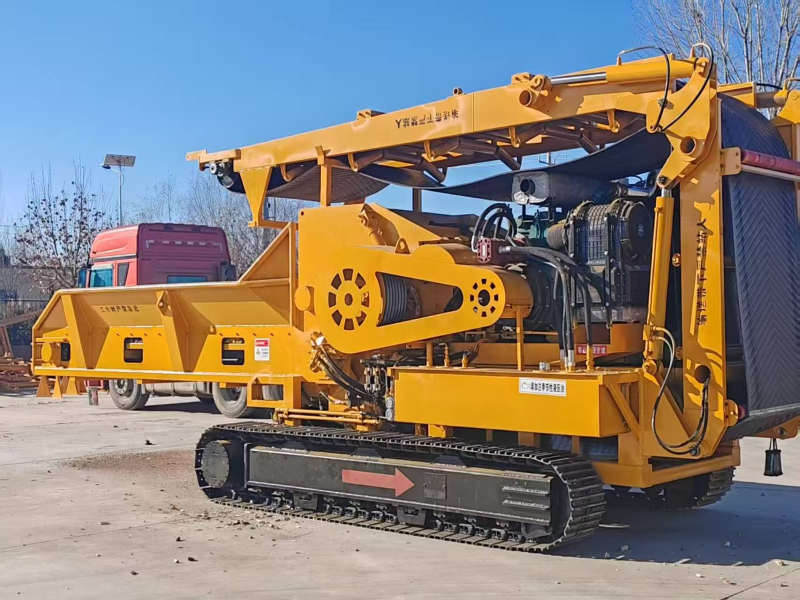
Tub grinder inspection intervals for storm debris should be adjusted by documented condition, feed-lot history, relocation, and the applicable machine manual. A calendar by itself cannot represent changing soil, hidden contamination, wet vegetation, long flexible material, or foreign-object events. This guide shows how to organize evidence without inventing universal service hours.
Keep the manual as the controlling source
Identify the exact model, serial-specific configuration, installed components, and current documentation before building the inspection sheet. Use the manufacturer’s required intervals and procedures as the baseline. Site observations may justify an earlier qualified inspection; they do not authorize extending a documented limit.
The tub grinder product section provides configuration context. The delivered documentation and authorized service guidance must control component access, isolation, measurement, adjustment, and replacement.
Use event-based inspection triggers
| Trigger | Evidence to record | Required decision |
|---|---|---|
| New feed lot | Source, geometry, moisture, contamination observations | Confirm the inspection and feeding plan still applies |
| Relocation | Transport condition, connections, visible movement, site setup | Complete the documented arrival checks |
| Foreign-object or impact event | Item, machine state, symptom, affected lot | Stop and inspect under the authorized procedure |
| Changing symptom | Heat, vibration, sound, leakage, tracking, output change | Escalate before the condition worsens |
| Shift close | Open issues, wear observations, debris accumulation, work orders | Carry unresolved items into the next shift |
These triggers organize attention; they are not replacement specifications. A qualified person must interpret observations using the applicable documentation.
Connect every observation to a feed lot
Storm debris often changes by collection area and cleanup phase. Record which released lot was being processed when a symptom or stop occurred. Without lot identity, maintenance cannot distinguish recurring machine behavior from a soil-heavy root load, tangled vegetation, or one concealed object.
Keep the inspection, loader, operating, and output records on the same lot identifier. The storm debris feeding and contamination guide describes the release gates that create this traceability.
Describe condition instead of writing “OK”
An inspection entry should name the component or area, observation point, machine state, date, lot, measurement method where authorized, photograph reference, comparison with the last check, and required follow-up. Phrases such as “normal,” “looks good,” or “same noise” are difficult to compare between shifts.
Use consistent approved viewpoints for photographs. Never enter an active work zone, remove a guard, or access an unsupported component merely to reproduce an image. Isolation and access procedures take priority over documentation convenience.
Distinguish cleaning from inspection
Debris accumulation can hide a condition, but cleaning does not prove that the underlying component is acceptable. Record what prevented the inspection, how the area was made accessible under the approved procedure, what was observed afterward, and who made the decision.
Likewise, replacing a part does not close the investigation. Record the removed condition, installed part identity, reason for replacement, related lot or event, and verification result. This evidence helps separate expected wear from contamination, setup, or an unresolved cause.
Build a shift matrix, not a single checklist
- Before start: confirm configuration identity, guards, visible fasteners, leaks, work area, discharge route, and open work orders.
- After a feed change: review material risks, inspection status, and observed machine response.
- After an event: isolate and inspect under the applicable procedure; preserve the item and lot evidence.
- During operation: record new or worsening changes without assigning unsupported limits.
- At shift close: document condition trends, unresolved issues, parts status, and next-shift restrictions.
The matrix should be short enough to use and detailed enough to support a decision. Separate mandatory checks from contextual observations so neither is lost in a long generic form.
Review trends before the next site or material change
Compare repeated observations by component, lot type, weather, relocation, and operating condition. A recurring symptom deserves a documented technical review even if a temporary response allowed production to resume. Do not reset the history when the machine moves to another cleanup site.
Use the technical resources archive to connect inspection evidence with material, workflow, and selection decisions. Teams evaluating a controlled-infeed alternative may also review the independent horizontal wood grinder resource while preserving the same event and lot records.
Control parts and consumables by configuration
List only approved parts and consumables for the delivered machine. Identify them by the current documentation and part reference, not by visual similarity or by a list copied from another model. Record on-site quantity, support-stock quantity, storage condition, responsible person, and replenishment route.
Connect parts readiness to observed condition. If a trend suggests that qualified inspection may be needed sooner, confirm that the correct parts, tools, lifting arrangements, and service access can be available without encouraging unauthorized work. Do not convert one project’s consumption into a universal replacement interval.
Audit the inspection process itself
Once per review cycle, select several completed records and trace them from feed lot to observation, decision, work order, verification, and next-shift handover. Check whether photographs show the named condition, whether open issues remained visible, and whether a repeated symptom received technical review. Missing evidence is a process problem even when no failure occurred.
Compare the checklist with actual work. Remove duplicated fields that crews skip, clarify ambiguous descriptions, and add a field only when it supports a decision. Keep the authorized procedure references current and record who approved each revision.
Prepare a useful service inquiry
Send the machine identity, configuration, applicable meter reading, feed-lot description, site conditions, symptom history, photographs, completed checks, open work orders, and the precise question. State what is known, what was observed, and what remains uncertain. Avoid asking for a universal interval without identifying the component and operating context.
Submit the evidence through the engineering contact page for configuration-specific review. A strong inspection program does not create unsupported numbers; it makes changes visible early and gives qualified personnel enough evidence to act.