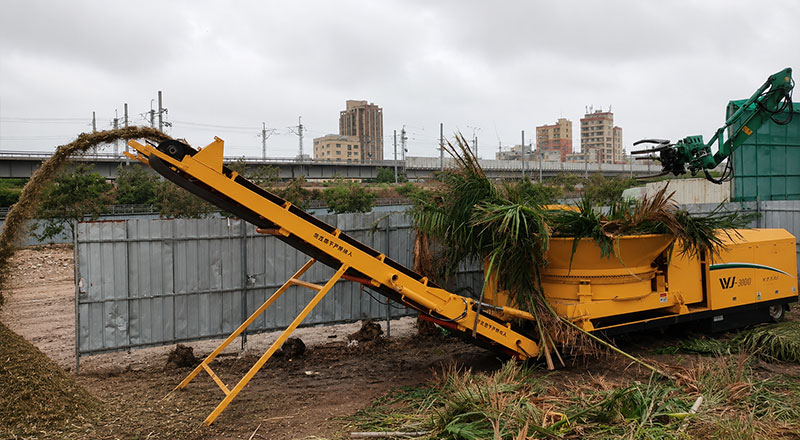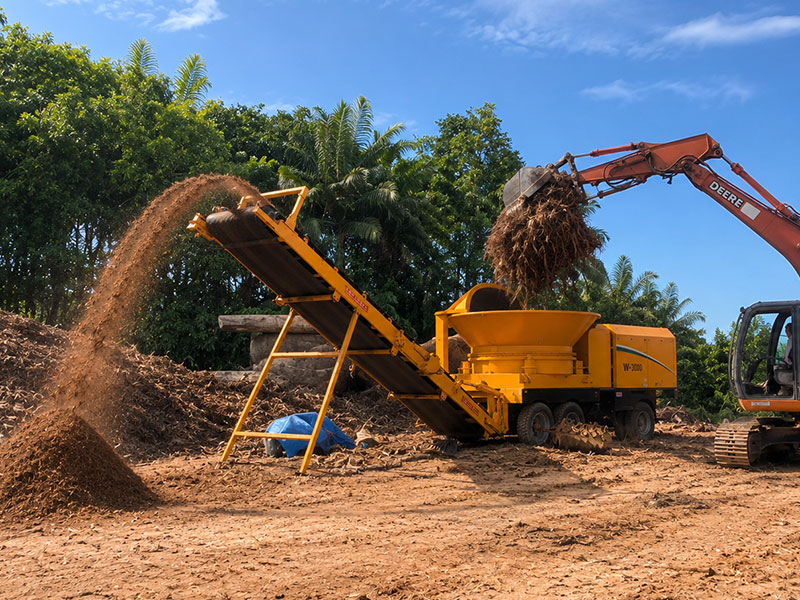
sawmill waste tub grinder throughput test: use a documented material sample, time boundary, machine configuration and accepted-output rule before comparing capacity figures.
Sawmill waste feed characteristics for tub grinder selection must be measured as a distribution, because one tidy sample cannot represent slabs, bark, trim blocks and existing fines. sawmill residuals tub grinder throughput test: change one factor at a time and measure accepted output over gross elapsed time while holding the loader, preparation, wear condition and destination rule constant.
sawmill residuals throughput is an experimental result, not a machine label. Branch geometry affects presentation, moisture and leafy fines affect handling, and screen selection changes the product boundary. A useful test records these factors without confusing correlation with cause.
Create a sawmill residual sampling sheet before the machine review
Sample at the points where residuals are created, not only from the mixed storage pile. Slabs from primary breakdown, dry trim blocks, bark from debarking and fines from sawing or planing behave differently in loading and size reduction. For each stream, record piece length, width and thickness bands, moisture test method, bark fraction, visible metal, soil pickup, storage age and whether fine material is already below the intended output range.
| Observation | Method to document it | Engineering use |
|---|---|---|
| Bulky-piece geometry | Measure a defined sample and retain photographs with scale | Checks feed opening, loader presentation and bridging risk. |
| Moisture variation | Use one stated method across fresh and stored lots | Separates material condition from machine-setting effects. |
| Fine fraction | Sample before grinding and after the proposed process | Prevents crediting the grinder for material that was already fine. |
| Foreign material | Record source, type and disposition of each reject | Supports sorting, inspection and wear-risk decisions. |
Do not convert these observations into universal capacity or wear-life claims. They define the trial envelope. The final configuration, inspection points and safe operating limits remain controlled by the documentation supplied for the selected machine.
Fuel-pathway evidence that changes the answer
"Sawmill residuals" describes an intended outlet, not a uniform feed. Build the project file around identified source lots such as forestry residues, clean waste wood, bark and slabs, or approved agricultural woody residues. For every lot, record geometry, moisture sampling method, visible mineral contamination, storage age and mixing rule. Define the receiver’s particle-size, fines, contamination and moisture acceptance criteria before estimating useful production.
Track mass to accepted fuel, oversize, recirculation, removed contamination and unresolved loss. Keep gross elapsed time beside productive grinding time so loader gaps, screen changes, discharge constraints and sampling work remain visible. Any heating, smoke or suspected self-heating in stored sawmill material requires the site’s emergency and fire-control procedure; this worksheet does not replace it.
Engineering control note
Change one planned variable at a time where a causal comparison is required. Record screen identity, wear condition, loader, discharge arrangement and measurement boundary. Preserve individual runs and ranges; do not hide variation inside a single average or attribute every change to the grinder.
Preserve an auditable test or wear ledger
Give every run or wear interval a unique identifier tied to the source lot. For throughput work, record input mass, accepted output, oversize, recirculation, productive minutes and delay codes. For wear work, record installed and removed condition, serviceable faces, reason for removal, contamination events, component value and the accepted tonnage processed during the interval.
Compare like with like. A new tool, a rotated tool and a prematurely damaged tool are not three equivalent consumption events. Likewise, a wet high-bulk-density batch and a dry branch-heavy batch should not be averaged without retaining their separate results. Review measurement uncertainty, scale method and moisture basis before calculating cost per accepted ton. The engineering conclusion should state what changed, what remained controlled, the observed range and what further trial would reduce uncertainty.
Define the response variables
Measure accepted mass or consistently measured volume, gross elapsed time, productive time, oversize, recirculation, rejects and delay minutes. Keep the outlet specification and sampling method unchanged across compared runs.
Create feed-size classes
Record representative and maximum stem diameter, length, forks, crowns, flexible vines and fine-organic fraction. Do not reduce geometry to an average diameter. The sawmill residuals lot sheet provides a repeatable classification method.
Measure moisture as a method, not an adjective
Use the same sampling location, preparation, instrument or laboratory method and reporting basis. Record rain, storage and drainage. Wet and dry labels without a method cannot support a comparison.
Control screen and wear condition
Identify the installed screen and relevant wear components before each run. Inspect using the exact machine procedure. A smaller opening may alter product and recirculation, but the effect must be observed with the tested material and configuration.
Hold the work cell constant
Use the same loader, operator plan, preparation rule, queue condition, discharge arrangement and delay definitions. Review the tub grinder section for configuration context and request the applicable documentation.
Analyze interactions conservatively
Feed size, moisture and screen may interact, so a single run cannot isolate every cause. Repeat comparable runs, report median and range, preserve raw observations and describe limitations. Send the protocol through the engineering contact page; the buyer capacity framework explains how results enter a purchase comparison.
Run a three-factor sawmill residuals test matrix
| Factor | Hold constant | Observe |
|---|---|---|
| Prepared geometry | Moisture class, screen, loader and destination rule | Presentation delays, bridging, productive and gross rate |
| Moisture condition | Source mix, geometry, screen and timing boundary | Handling, bulk-density shift, recirculation and accepted yield |
| Screen choice | Lot, preparation, loader and component condition | Particle-size distribution, oversize, recirculation and gross throughput |
Change one planned factor per comparison and preserve the original readings. If the woody-to-fine-organic ratio, contamination class, wear condition or destination changes, start a new test row instead of averaging unlike runs.
Teams comparing equipment layouts can use the horizontal wood grinder overview to frame additional questions, while the measured lot, site and destination remain controlling for this downstream product project.
Release record
- Primary question: sawmill residuals tub grinder throughput test
- Material lots and exclusions are identified.
- Gross time, productive time, accepted output and rejects use one written boundary.
- Configuration, wear condition, loader and discharge arrangement are recorded.
- Assumptions, quotations and measured observations are labeled separately.
- Safety, fire, isolation and maintenance instructions remain controlled by the supplied documentation and site procedures.
Review the site’s relevant equipment and application information, then use the project evidence or contact resource to submit the material file. For a complementary equipment overview within the WeiDong network, see horizontal wood grinder. A configuration recommendation should follow representative samples and a documented trial, not an unverified headline rate.
Evidence package and next step
Retain the stream map, representative photographs, measurements, configuration, pre-start record, gross and productive time, delay codes, accepted-output samples, rejects and corrective actions. Mark measured observations, supplier statements and planning assumptions separately.
Continue with the tub grinder engineering range, sawmill feed-characteristics guide, biomass throughput test method, engineering contact page. For an adjacent WeiDong equipment view, see horizontal wood grinder. Final selection should follow representative material and a documented trial rather than an unverified headline rate.