Safe feeding land-clearing roots into tub grinder: Safe feeding land-clearing roots into a tub grinder begins before the loader lifts the first root ball. The work cell needs a documented feed envelope, contamination quarantine, prepared queue, machine-specific operating method, clear communication, and stop authority. This field protocol supports a site risk assessment; it does not replace the installed manual, employer procedures, trained supervision, or local law.
Approve the feed envelope
Record maximum permitted root dimensions, attached wood, preparation, moisture condition, visible soil and stone limits, prohibited material, and the method for questionable loads. Use the root feed-characteristics guide to create lot IDs.
A difficult root can be within the approved envelope; an unknown root is not automatically acceptable. Keep wire, metal, large stones, burning material, chemicals, pressure-treated wood where prohibited, and demolition debris in marked quarantine until an authorized decision is made.
Separate inspection from production traffic
Place receiving and inspection upstream of the approved feed queue. Give the inspector a safe observation method that does not require entering loader swing or machine danger zones. Mark dirty, quarantine, approved, and reject piles.
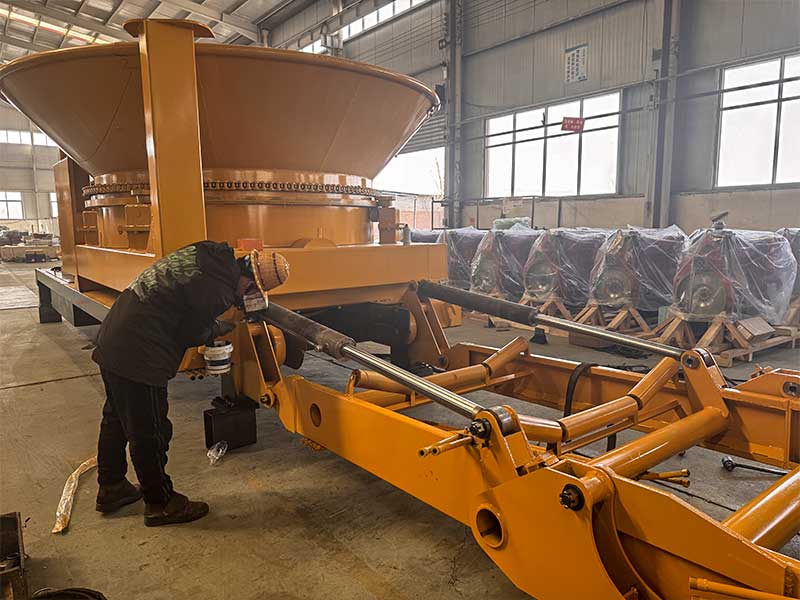
The tub grinder product section helps identify the equipment family, but the actual exclusion distances, guarding, controls, and feed rules come from the exact installed machine and site plan.
Prepare roots for controlled presentation
Use approved equipment to shake, spread, cut, or orient roots where required. Remove material that cannot be safely presented within the feed envelope. Record preparation time and rejects so pressure to meet a rate does not quietly eliminate the safety gate.
Never stand on a pile to attach, guide, or release a root near operating equipment. Do not use the loader to force a bridge or push material against moving components. Stop when visibility, communication, pile stability, or machine response is abnormal.
Design the loader route
Define the pickup position, travel lane, turning area, presentation point, return route, and waiting position. Separate pedestrians and trucks; preserve service and emergency access. Evaluate slope, soft ground, overhead lines, lighting, dust, and wind.
Use a charge size and orientation permitted by the machine-specific procedure. The loader operator should maintain visibility and stable control throughout the cycle. A spotter, when required by the site plan, remains outside the operating envelope and uses agreed signals.
Use one communication system
Agree on start, feed, hold, stop, emergency stop, and restart signals. Confirm who has authority to release production after contamination, blockage, inspection, or weather hold. Radios and hand signals need a fallback for noise or lost communication.
The grinder operator must be able to reject a charge before presentation. The loader operator must be able to stop when the tub or discharge is not clearing normally. No production target overrides stop authority.
Control abnormal events
For unexpected metal, stones, smoke, unusual vibration, noise, a bridge, blocked discharge, damaged guarding, or loss of communication, stop feeding and follow the site response plan. Keep people away until the machine is in the condition required for assessment.
OSHA’s control-of-hazardous-energy standard covers servicing and maintenance where unexpected energization or stored energy can injure employees. Clearing a jam or entering a danger zone requires the employer’s machine-specific isolation procedure, trained authorized personnel, and verification.
Audit the shift
Record root lots, rejects, preparation, loader cycles, hold reasons, contamination findings, abnormal events, inspection results, and corrective actions. Review recurring holds as workflow evidence rather than deleting them from production time.
Send the feed-envelope and event record through the engineering contact page. A broader matrix root-processing workflow can align procurement, layout, and commissioning with this field protocol.
Run a pre-start walkthrough and baseline cycle
Before releasing the workflow for safe feeding land-clearing roots into tub grinder, bring the site supervisor, grinder operator, loader operator, preparation crew, maintenance representative, and traffic or safety lead to the marked work cell. Walk the normal material route, quarantine response, hold signal, emergency stop communication, maintenance access, sample collection, output removal, and shift handover. Confirm that signs and physical markings are visible from the operating positions. Record unresolved conflicts and keep production on hold until the responsible person accepts the corrective action under the site procedure.
Then run a controlled baseline with an identified root lot and the approved configuration. Record charge sequence, loader-cycle components, productive and elapsed time, queue stability, preparation, contamination findings, rejects, discharge handling, accepted output, samples, stops, and unusual observations. The baseline is not a capacity promise. It is a reference for detecting when weather, root geometry, soil, loader travel, wear, or downstream congestion changes the system. Repeat it after relocation or a major workflow change.
Manage changes and shift handover
Give the layout and work instruction a revision number. Only an authorized role should change pile locations, routes, exclusion zones, communication signals, preparation rules, screen or operating configuration, or the definition of accepted output. Brief affected personnel before the change becomes active. Keep the old record so incident reviews and production comparisons can identify which method was in force. Temporary workarounds need the same review; repeated informal exceptions are evidence that the workflow or equipment boundary needs redesign.
At handover, state the active root lots, quarantined material, machine and loader condition, ground and weather changes, available discharge space, open holds, maintenance status, samples awaiting results, and corrective actions. The incoming team should confirm the work cell and signals rather than relying only on a written note. Review daily records for recurring contamination, preparation delays, route conflicts, abnormal machine response, or output rejection, and change the process before those signals become routine.
Restart gate
Restart only after the cause is identified, the required inspection or corrective work is complete, guarding and the work area are verified, affected personnel are clear, and the responsible authorized person releases the machine under the site procedure. Record the event and update the feed envelope, preparation, training, or layout if the same condition could recur.