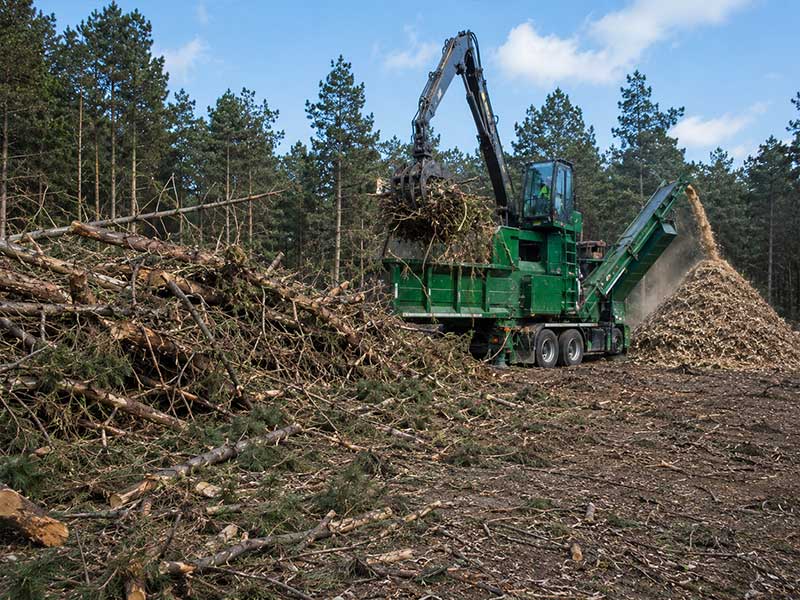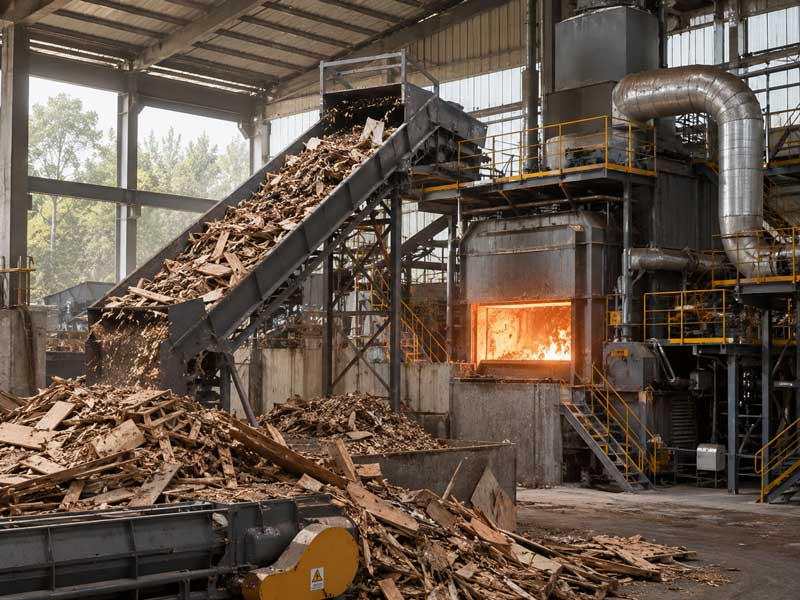
Wood grinder production capacity is determined by a combination of material characteristics, mechanical configuration, and operational settings. To optimize your daily tonnage output, you must align your screen sizes with your specific feedstock moisture levels, maintain sharp tungsten carbide hammer tips, and utilize an automated feed control system to prevent engine lugging. Investing in advanced heavy-duty machinery like our WD1690 or WD3600 series maximizes this capacity by matching raw engine torque with responsive, intelligent material feeding. Ultimately, understanding and managing these key operational variables transforms raw forest residuals and bulky stumps into a highly predictable, high-output revenue stream for your biomass or land-clearing business.
Introduction
In the industrial wood recycling and biomass production business, capacity is the metric that dictates your daily profitability. When I consult with international buyers looking to scale up their operations, the most common question I receive isn’t about the aesthetic design of our machinery. Fleet managers and plantation operators ask me straight to the point: “Micheal, how can I push this grinder to its absolute maximum volumetric limit without destroying the components?”
Whether you are running a massive crawler tub grinder or a high-precision horizontal unit, a wood grinder is a finely tuned system. You cannot simply throw material into the hopper and expect peak performance without managing the operational variables. If your hourly throughput drops, your cost-per-ton increases, eating away at your margins. This technical guide breaks down the top five factors that directly dictate your wood grinder’s production capacity and provides actionable engineering strategies to optimize each one.
1. Feedstock Characteristics: Moisture, Species, and Contamination
The physical properties of the wood you load into the machine are the primary baseline for production speed. Not all wood waste is created equal, and treating all feedstocks the same will choke your production line.
Moisture Content and Wood Density
Green, freshly cut timber or wet palm oil mill residues contain massive amounts of water weight. Wet wood fibers are highly flexible and stringy, making them notoriously difficult to shear and shatter. This creates a “cushioning” effect inside the grinding chamber, forcing the hammermill to expend double the energy compared to processing dry, brittle pallet scrap or aged forest clearing leftovers. Hardwood species like oak or eucalyptus require significantly higher cutting force than softwoods like pine.
The Optimization Strategy
- Blended Feeding: If possible, mix your wet or highly dense feedstocks with drier, more brittle materials (such as scrap pallets or sun-dried wood blocks) before loading. This prevents stringy fibers from wrapping around the rotor and blinding the screens.
- Strategic Pre-Drying: For biomass energy plants, storing raw materials in sloped, well-ventilated staging areas for even a few days can drop moisture levels enough to increase grinder throughput by up to 20%.
2. Screen Size and Open Area Ratio
The sizing screens installed beneath or behind the grinding rotor act as the ultimate gatekeeper for your capacity. Material cannot exit the grinding chamber until it is reduced to a size smaller than the screen holes.
The Restriction Bottleneck
Many operators make the mistake of installing an ultra-fine screen (e.g., 2-inch round holes) while processing massive, bulky stumps, expecting high tonnage. Small screen openings restrict material flow, keeping the wood trapped in the mill chamber for too many continuous rotations. This causes “over-grinding,” turning your wood into fine powder, driving fuel consumption through the roof, and cutting your hourly capacity in half.
The Optimization Strategy
- Match Screen to End-Product Specifications: Only use fine screens if your buyer pays a premium for micro-chips or precise pellet feedstocks. If you are supplying standard industrial boilers or creating raw landscape mulch, swap out small holes for large, aggressive hex or square screens (e.g., 4-inch to 6-inch openings).
- Utilize High-Open-Area Designs: Choose screens that feature modified geometry (like staggered hexagons) which increase the total open percentage area of the steel plate without compromising structural rigidity. More open area means instant material discharge.
3. Hammer Configuration and Cutting Tip Wear
The hammermill rotor is the beating heart of our WD3600 and WD1690 lines. The condition and style of the teeth or tips bolted to these hammers dictate how efficiently energy transfers from the engine to the wood.
Dull Teeth Destroy Throughput
As tungsten carbide face inserts strike rocks, sand, and hard wood knots, their sharp leading edges wear down and round off. Instead of cleanly fracturing and chipping the wood, dull tips begin to punch and rub against the material. This drastic increase in friction generates extreme heat, robs engine horsepower, increases diesel consumption, and causes an immediate drop in volumetric throughput.
The Optimization Strategy
- Implement a Strict Rotation Schedule: Do not wait for a tooth to shatter before changing it. Establish a daily or weekly inspection routine. Standard carbide tips can often be rotated 180 degrees to expose a fresh, razor-sharp cutting edge, instantly restoring your cutting capacity.
- Select the Right Tooth Profile: Use sharp, narrow, knife-like inserts for clean logs and long trees to achieve high-speed slicing. Switch to rugged, block-faced, impact-resistant tips when processing contaminated root stumps or demolition lumber containing nails.
4. Grinder Capacity Optimization Matrix
To help your operational foreman balance these parameters on the job site, here is a quick-reference matrix based on our engineering testing protocols at WD Machines:
| Parameter Variable | Impact on Capacity | Low Capacity Configuration | High Capacity Optimization |
|---|---|---|---|
| Material Moisture | Extreme | Wet, green logging slash (50%+ moisture) | Seasoned residuals or blended dry feedstock |
| Screen Configuration | High | Small round holes (Restricted flow) | Large hexagonal or square openings |
| Hammer Tip Condition | High | Rounded, dulled, or heavily impacted faces | Sharp, rotated tungsten carbide edges |
| Feed System Setting | Critical | Manual feeding / Continuous stalled rotor | Automated, PLC-regulated smart feeding |
| Rotor Speed (RPM) | Moderate | Dropping below peak torque curves | Maintained engine RPM via uniform loading |
5. Intelligent Feed Control Systems and Engine Load Management
An industrial wood grinder achieves maximum capacity when it operates right at the upper edge of its engine’s peak torque curve.
The Stalling Cycle
Inexperienced operators often jam material into the hopper as fast as the loader can move, over-compressing the feed roll or overfilling the tub. This bogs down the engine, dragging the RPMs down below the efficient power band. When the engine almost stalls, the operator has to stop feeding entirely, wait for the engine to recover, and restart. This stop-and-go cycle destroys your average hourly production metrics.
The Optimization Strategy
- Leverage Adaptive PLC Feed Systems: Our WD1690 Horizontal Grinder features an advanced programmable logic controller (PLC) that constantly monitors engine RPM. If the rotor hits a massive log and engine speed drops, the smart system automatically slows down or momentarily reverses the feed conveyor and compression roller. Once the engine clears the load and recovers its RPM, the system immediately accelerates the feed back to maximum speed—all without manual operator intervention.
- Maintain Uniform Material Alignment: For horizontal grinders, stack your logs and long branches parallel to the feed table rather than crisscrossed. This allows the compression roller to smoothly feed the wood without creating bridging jams that cut off feed flow.
6. Support Equipment and Job Site Flow Logistics
Sometimes, the bottleneck limiting your wood grinder’s production capacity isn’t the grinder itself—it is the support infrastructure surrounding it.
The Support Chain Bottleneck
A grinder capable of processing 60 tons per hour is useless if your excavator loader can only supply 30 tons per hour to the hopper. Similarly, if your discharge conveyor is throwing wood chips into a small pile that blocks the machine’s exit route every 20 minutes, your grinder will sit idle while you move support tractors around to clear the stack.
The Optimization Strategy
- Size Your Loaders Appropriately: Ensure your feeding excavator or wheel loader uses a high-capacity bypass log grapple or a high-volume material bucket designed to match the maximum intake width of the grinder’s hopper.
- Optimize Product Staging: Position the grinder so that the discharge conveyor throws material downwind and directly into large-capacity walking-floor trailers or massive open storage bays. This allows for continuous, uninterrupted processing for hours on end.
Micheal’s Final Verdict for Maximum Output
Optimizing your wood grinder’s capacity is an active, ongoing management process. If you notice your production numbers slipping, run through these five critical checks systematically: Check the moisture of your stack, verify that your screens aren’t too restrictive for the job, rotate your worn hammer tips, let your smart automated feed system manage engine load, and clear out logistics bottlenecks around the machine.
Partner with WD Machines to Scale Your Production
At WD Machines, we build our equipment to withstand the harshest processing environments while maintaining elite-tier volumetric output. Whether you need the brute force of our WD3600C Tracked Tub Grinder for massive stumps or the intelligent speed of our WD1690 Horizontal Grinder for calibrated biomass chips, our machinery is engineered to maximize your operational efficiency.
Ready to boost your tonnage and lower your cost-per-ton?
Visit our global engineering platform at www.wdmachinary.com or connect with me, Micheal, today. Share your raw material specifications and your target hourly volume, and I will help you select the exact machinery, screen sizes, and tooth configurations needed to unlock your peak production potential. Let’s optimize your operations together!