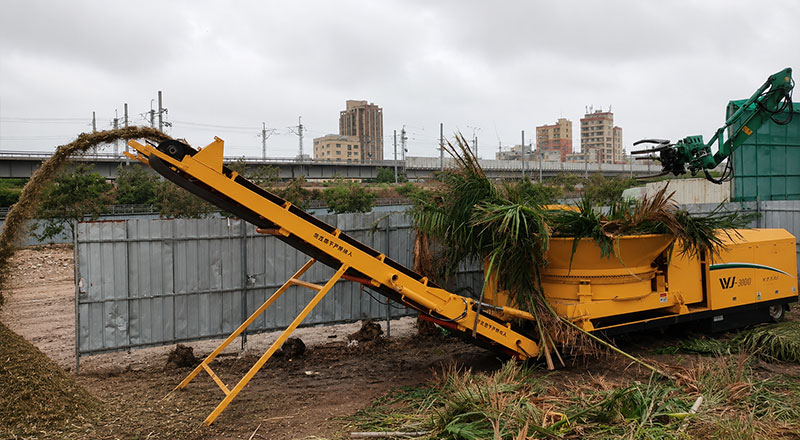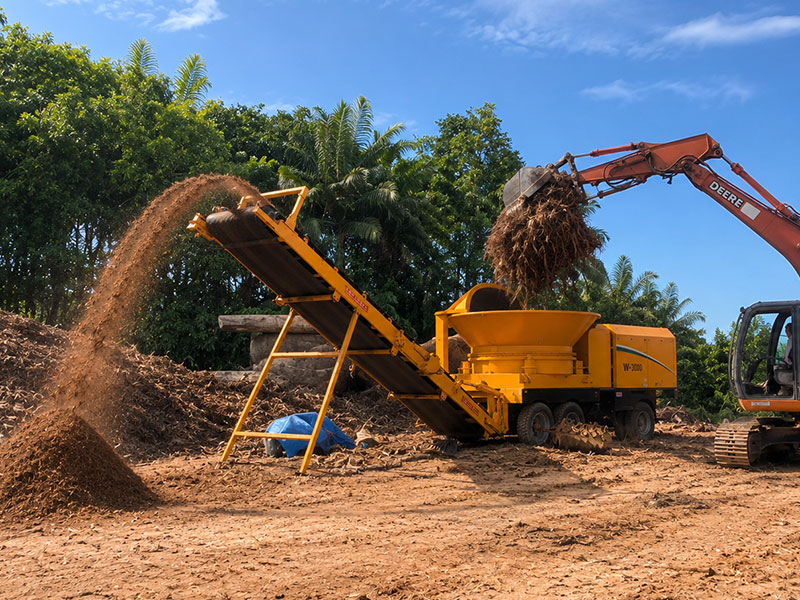
A tub grinder feedstock contamination check should happen before the loader begins routine feeding, not after metal, stone, wire, or soil has reached the rotor. The practical method is to divide the incoming pile into risk groups, inspect representative loads, create a quarantine area, and record what is removed. This does not eliminate every hazard, but it gives the operator a repeatable basis for deciding what can enter the grinding zone.
Why contamination is an operating problem
Mixed wood waste rarely arrives in a uniform condition. Land-clearing material may carry soil and stones around roots. Demolition wood can contain nails, hinges, straps, or wire. Municipal green waste may include bags, fencing, garden hardware, or material placed in the wrong collection. Even clean forestry residue can collect foreign objects during transport and stockpiling.
Contamination affects more than wear. It can interrupt feeding, damage screens or cutting components, create unsafe projectiles, and make the finished material unsuitable for its intended use. The site’s tub grinder maintenance checklist covers machine inspection; the feedstock check described here addresses the material before it reaches the machine.
When estimating the financial effect, separate fuel and routine labor from wear parts, cleanup, rejected material, and unplanned stoppages. The tub grinder operating-cost breakdown provides a broader cost framework for recording those items.
Classify the pile before inspecting it
Walk the receiving area and divide material into practical risk groups. Keep source and handling history in the classification. A load of clean sawmill offcuts is not the same inspection problem as storm debris collected from roadsides.
| Feedstock group | Typical concern | Inspection emphasis |
|---|---|---|
| Clean wood and forestry residue | Occasional stones, chain, or handling debris | Loading surface and transport history |
| Roots and land-clearing waste | Soil, rock, buried wire, dense root mass | Root-ball cleaning and separation area |
| Municipal green waste | Plastic, bags, fencing, household contamination | Visual sorting and source segregation |
| Construction and demolition wood | Nails, bolts, straps, brackets, treated material | Metal-removal plan and acceptance rules |
| Pallets and packaging wood | Nails, banding, mixed non-wood packaging | Banding removal and load-by-load checks |
The categories are operating aids, not guarantees. A low-risk pile can still contain a serious foreign object. The purpose is to focus inspection effort where the probability and consequence are higher.
Root balls need a separate preparation decision because hidden soil and stone can change both wear and feed consistency. The tree-root and land-clearing waste processing guide gives a complementary workflow for cleaning and presenting this material before grinding.
Set up three material zones
Create a receiving zone, an approved feed zone, and a quarantine zone. Incoming material remains in receiving until it has passed the site’s check. Material that meets the acceptance rule moves to the approved feed pile. Questionable pieces go to quarantine for cleaning, secondary inspection, or disposal.
Keep quarantine away from the loader’s normal shortcut. If rejected material is placed beside the approved pile, it often returns to the feed stream during a busy shift. Mark the zones and include them in the daily briefing. The application overview can help the team distinguish forestry, green-waste, land-clearing, and other material workflows.
Inspect representative loader buckets
Do not judge a large stockpile from its clean outer surface. Open the pile with the loader and inspect material from different locations and depths. Record at least the source, pile section, visible contaminants, material condition, and the action taken. Increase the sample frequency when the source changes or when one rejected object suggests a wider problem.
Operators should never enter an unstable pile face or work beneath raised equipment. Inspection must follow the site’s traffic controls, lockout rules, equipment manual, and local safety requirements. For a broader equipment review, see the guide to safety features for heavy-duty wood processing equipment.
Define stop and reject rules
A useful check needs clear decisions. Define which objects require immediate rejection of a piece, which findings require the whole load to be quarantined, and when the grinder operator must stop feeding. Rules may differ by final product. Wood intended for compost preparation, mulch, boiler fuel, or another market can have different contamination limits.
- Stop when an object cannot be identified safely.
- Quarantine a load when repeated contamination indicates a source problem.
- Remove wire, straps, and loose metal before material enters the approved pile.
- Clean excessive soil and rock from root material using an approved method.
- Reject chemically treated or otherwise restricted material when it is outside the site’s acceptance policy.
- Record the supplier or collection route so recurring problems can be traced.
Use detection equipment as one control layer
Magnets, metal detection, screening, and downstream separation can be useful, but they do not replace receiving inspection. Detection performance depends on the object, its location, the feed presentation, and the installed system. Non-metallic stone and soil require different controls. Ask the equipment supplier what detection and protection functions are actually included, how they should be tested, and what the operator must do when an alarm occurs.
If the operation handles several material streams, compare their physical characteristics before selecting the machine and protection package. The article on choosing between a tub grinder and a horizontal grinder for biomass processing explains why feed presentation and material form influence the decision.
Record contamination by source
A simple log turns random cleanup into useful operating evidence. For each incoming source, record the number of inspected loads, rejected pieces, major contaminant types, inspection time, and any grinder interruption associated with that material. Review the log weekly. A source that repeatedly creates wire or soil problems may need revised acceptance terms, different unloading instructions, or a separate preparation step.
Do not invent a universal acceptable percentage. The safe and commercial limit depends on the machine, protection system, final product, contract, and regulations. Use the log to compare sources within the same operation and to support a discussion with the responsible engineer or supplier.
After contamination controls are stable, measure whether sorting time, loader travel, machine waiting, or downstream handling is limiting the shift. Record those losses separately instead of treating every delay as a grinder-capacity problem.
Start-of-shift contamination checklist
- Confirm receiving, approved, and quarantine zones are visible and accessible.
- Identify the source and material type of each active pile.
- Inspect representative material from more than one part of the pile.
- Remove or quarantine visible metal, wire, stone, soil-heavy roots, and mixed waste.
- Confirm stop-work and rejection rules with the loader and grinder operators.
- Check that detection or separation equipment has passed its required test.
- Record findings and increase inspection when the source or contamination pattern changes.
Use this check together with the machine manual and site risk assessment. If you need to discuss a feedstock, send clear photos of the pile, typical maximum dimensions, moisture condition, contamination examples, desired output, and loading method. The tub grinder product section and engineering contact page are the appropriate next steps for configuration questions.