If you choose the wrong grinder, you waste fuel, lose output, and fight jams every day. I have seen this mistake turn a good biomass line into a costly problem.
You should choose a tub grinder for large, bulky, mixed biomass and choose a horizontal grinder for long materials, steadier feeding, better size control, and safer handling on demanding sites. Your final choice should match feedstock shape, target output size, mobility needs, and maintenance budget.
In my work at WDMachinary, I do not start with the machine. I start with the material, the site, and the real production goal. That is where the right answer always comes from, and that is also what keeps a project profitable for the long run.
Understanding Your Biomass Feedstock: Key Factors for Selection?
A grinder can look powerful on paper, but the wrong match with feedstock will still cause poor output, rough operation, and extra wear. I have seen many buyers focus on engine power first and regret it later.
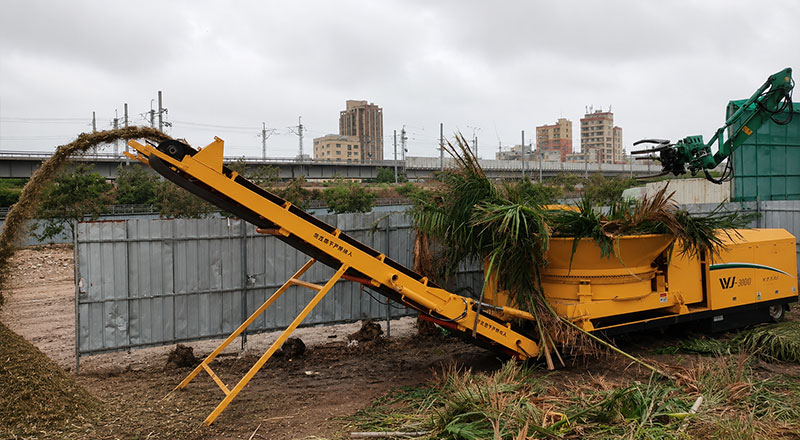
The first thing I check is feedstock type, length, bulkiness, moisture, and required discharge size. Tub grinders fit bulky roots, branches, and straw well, while horizontal grinders are better for relatively long materials such as whole trees and long branches.
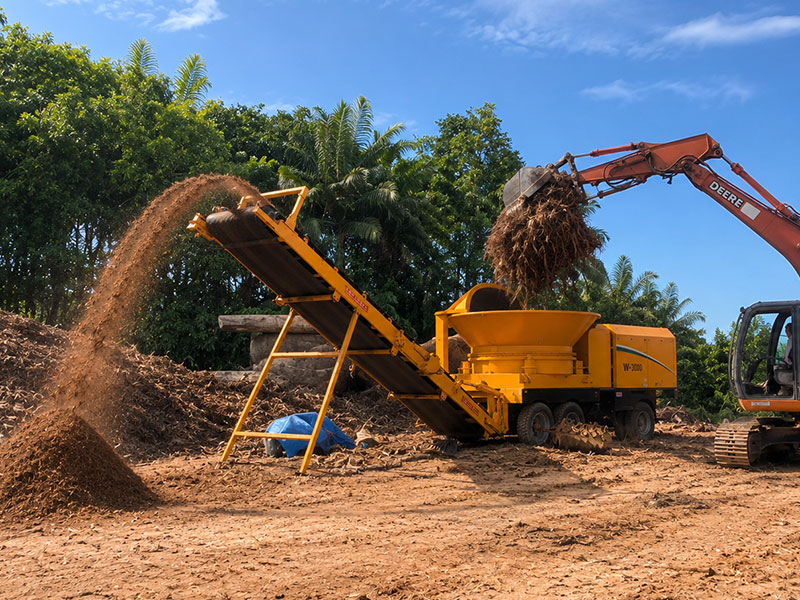
When I talk with clients, I usually ask them to show me photos of the raw material pile before we discuss any model. That simple step saves a lot of trouble. A machine does not process “biomass” in the abstract. It processes a very specific stream. That stream may be tree roots, bark, branches, straw, demolition wood, or mixed waste. In the reference materials, the tub grinder setup is shown as suitable for tree roots, branches, bark, straw, and similar bulk biomass. It can also use different roller assemblies for different raw materials, including a knife roller for roots and branches and a hammer roller for templates, demolition materials, and bark-heavy waste. By contrast, the horizontal grinder is clearly described as a fit for relatively long materials such as whole trees and very long wood branches. I also pay close attention to the final size requirement. Some biomass power plants may need straw at about 6–10 cm, while wood fuel may need 5–8 cm or less, and this can be customized according to need.
| Feedstock factor | What I look at | Better fit |
|---|---|---|
| Material length | Whole trees, long branches | Horizontal grinder |
| Bulkiness | Roots, bark piles, straw, mixed bulk feed | Tub grinder |
| Material type | Demolition wood, templates, bark | Tub grinder with hammer roller |
| Output size need | Tight fuel spec or plant spec | Depends on setup, screen, and application |
Tub Grinders vs. Horizontal Grinders: Core Operational Differences?
Many buyers think these two machines do the same job in the same way. That idea leads to poor line design, feeding trouble, and avoidable safety risks.
The main difference is feeding style and material behavior. Tub grinders use a large cylindrical tub and vertical-style loading for bulk materials, while horizontal grinders use horizontal feeding and are especially suitable for long, straight, oversized feedstock.
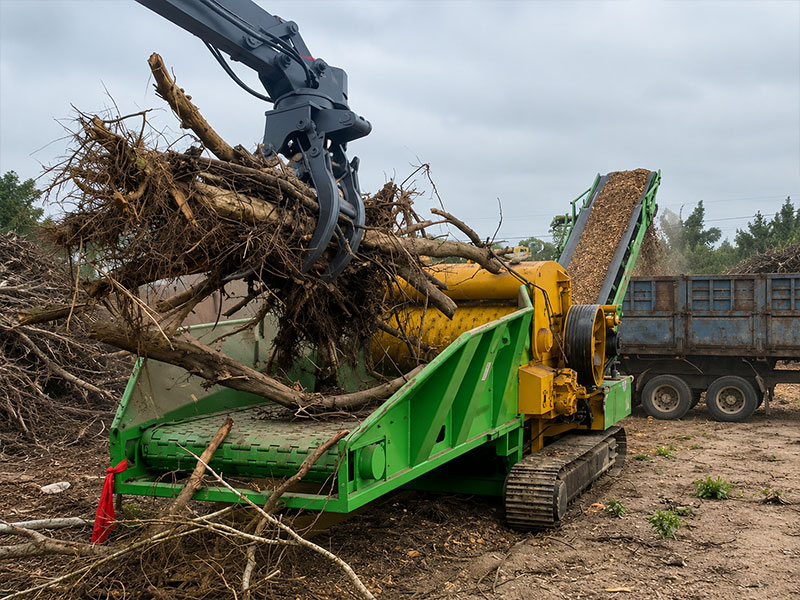
In simple terms, I explain it like this: a tub grinder is a strong bulk eater, and a horizontal grinder is a controlled long-material handler. The tub grinder in the reference materials has a large cylindrical tub with a 3600 mm inlet, and it is promoted for large-scale wood and bulk materials. The trailer type model WD3600T and crawler type model WD3600C both follow this idea. That big tub makes loading easy when material is irregular and piled in bulk. The horizontal grinder, on the other hand, is better when the material is long and awkward, such as whole trees and extended branches. The feeding method in the reference materials is divided into vertical and horizontal, which supports this practical distinction in machine behavior. In my experience, this difference affects not only throughput but also operator rhythm, loader coordination, and how often the line sees surges or inconsistent feeding.
| Operating point | Tub grinder | Horizontal grinder |
|---|---|---|
| Feed direction | Vertical-style bulk feeding | Horizontal feeding |
| Best material form | Loose, bulky, irregular feed | Long and linear feedstock |
| Loader work | Fast bulk loading | More controlled feed presentation |
| Typical result | High-volume rough reduction | Stable feeding and cleaner control |
When to Choose a Tub Grinder: Efficiency for Large-Scale Bulk Processing?
Some operations lose time because they try to feed bulky root balls, bark heaps, or straw bundles through a machine that prefers straighter material. That mismatch hurts output.
I choose a tub grinder when the site handles high volumes of bulky biomass, such as tree roots, branches, bark, and straw, and when fast bulk loading matters more than fine feeding precision.
I have recommended tub grinders many times for yards where the raw material arrives in messy, uneven piles. In that situation, ease of loading can matter as much as cutting power. The WD3600T trailer type tub grinder is described as a reliable and efficient wood grinder with a large cylindrical tub for large-scale wood and bulk materials, with a capacity of 25–40 tons per hour and 408 kW engine power. The WD3600C crawler type tub grinder has the same capacity range and power level, and it is also positioned for tree roots, branches, straw, and similar feed. That tells me these units are built for heavy continuous reduction, not light cleanup work. I also like the flexibility of roller assemblies noted in the materials. The knife roller fits roots and branches, and the hammer roller fits template waste, demolition materials, and bark-rich biomass. So if the client has varied bulk biomass, the tub grinder gives a wider operating window.
| Tub grinder advantage | Why it matters |
|---|---|
| Large tub opening Ø3600 mm | Easy loading of bulky biomass |
| 25–40 T/hour capacity | Good for production yards |
| Handles roots, bark, straw | Useful for mixed biomass streams |
| Knife or hammer roller options | Better fit for changing raw materials |
The Advantages of Horizontal Grinders in Precision and Site Safety?
Some sites are hard to manage because material is long, feeding is uneven, and operators need more control near the infeed area. That is where machine style matters a lot.
I prefer a horizontal grinder when the feedstock is long, when I need steadier material presentation, and when the site values more controlled feeding for output consistency and safer handling.
The reference materials do not give many detailed horizontal grinder specs, but they do give one key point that is enough to guide the choice: horizontal grinders are for crushing relatively long materials, such as whole trees and very long branches, and the crushed output is suitable for wood-based panel plants, biomass power plants, and pellet factories. That is very important. Long feedstock can be difficult in many reduction systems if the feeding path is not stable. A horizontal layout helps present this kind of material in a more even way. The materials also note that feeding methods can be vertical or horizontal, which again supports choosing the machine style based on raw material shape and handling needs. In my own projects, horizontal grinders are often the better answer when the client wants less chaotic loading behavior and more predictable line flow. That can improve size consistency and also reduce risky operator intervention near the feed area.
| Why I favor horizontal grinders in some sites | Site benefit |
|---|---|
| Better for whole trees and long branches | Less feed struggle |
| More controlled material presentation | More stable downstream flow |
| Output suits panel, power, pellet sectors | Easier process matching |
| Good fit for precision-minded operations | Better consistency |
Assessing Mobility Requirements: Trailer vs. Crawler Chassis Options?
A strong grinder is still the wrong grinder if it cannot move the way your site works. I have seen mobility become the hidden cost that buyers forget in the first meeting.
Choose a trailer chassis for short-distance movement and simpler transport planning. Choose a crawler chassis when the machine must move frequently around the work yard and remote-control self-propelled travel is valuable.
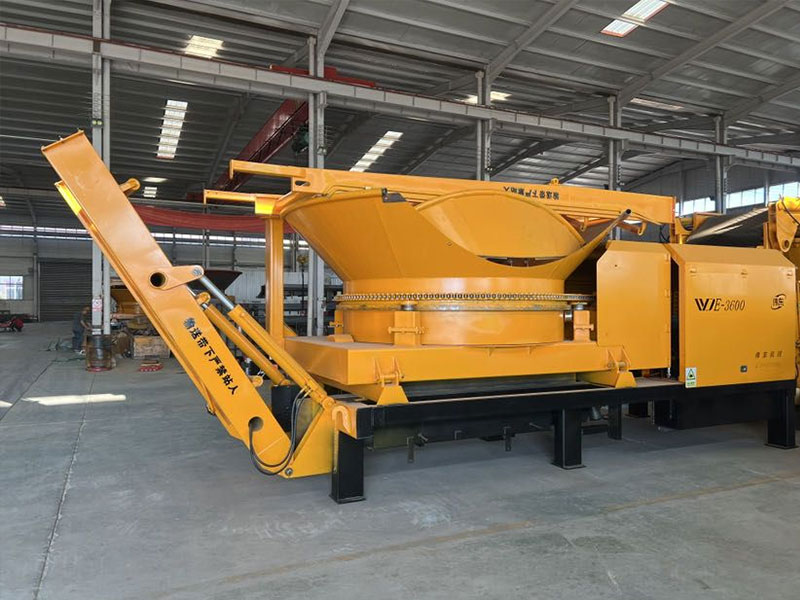
Mobility is not just about transport. It affects daily labor, yard layout, and how quickly you can switch work zones. The trailer type tub grinder WD3600T is described as a standard trailer type that can be towed by forklift and is suitable for short-distance movement. It also has a semi-trailer double-towed type that can apply for a vehicle license. That makes sense for fixed or semi-fixed sites where movement is occasional. The crawler type tub grinder WD3600C is better when the machine needs to move often in the yard. The materials say there is a remote control self-propelled crawler chassis 3600 series option if the work yard needs frequent movement. I like crawler units for rough ground, wood yards, and demolition-like biomass areas where repositioning is part of daily work. I like trailer units for plants with defined lanes and loading zones. This is not a minor detail. It changes site efficiency.
| Chassis option | Best use case | Reference model |
|---|---|---|
| Trailer chassis | Short-distance movement, fixed yard flow | WD3600T |
| Semi-trailer type | Easier transport compliance | WD3600T |
| Remote-control crawler chassis | Frequent movement in yard | WD3600C / 3600 series |
Evaluating Maintenance Costs and Long-Term Component Durability?
A low purchase price can look attractive, but a grinder earns its value over years of uptime. I have learned that wear parts and service access often decide real profit.
I assess maintenance by checking wear-part type, service access, roller configuration, and how easily the machine can be cleaned and adjusted. Flexible cutter systems and convenient maintenance access help reduce downtime over the long term.
When I review grinder value, I always move past the sales brochure and look at what the maintenance team will face every week. The reference materials give useful details for this. The WD3600T tub grinder workbench can be turned over at 90 degrees for cleaning up materials, and this is described as convenient for maintenance. That matters because easier cleaning reduces labor time and keeps buildup from becoming a bigger mechanical issue. The WD3600T data also lists cutter sets, bed knives, cutter screws, and dimensions for key cutting parts, which shows that wear components are clearly defined and service planning can be more systematic. On the application side, the option to use a knife roller assembly or a hammer roller assembly means the operator can match the wear system to the raw material. In my experience, this can improve both cutting efficiency and part life. Hard contamination, demolition residue, and abrasive bark all affect cost differently, so matching the cutting system to the feedstock is one of the smartest ways to protect long-term ROI.
| Maintenance factor | What it affects | Useful reference point |
|---|---|---|
| 90-degree turnover workbench | Cleaning time, service ease | Faster maintenance access |
| Defined cutter and bed knife specs | Spare parts planning | More predictable upkeep |
| Knife vs hammer roller choice | Wear life by material type | Better component matching |
| Feedstock contamination level | Operating cost | Must be checked at project start |
Conclusion
I choose between tub and horizontal grinders by matching the machine to feedstock shape, output target, mobility, and service reality. That is the safest path to stable biomass profits.