If you choose the wrong grinder, you lose fuel, time, and output fast. I have seen good yards slow down just because the machine did not match the raw material.
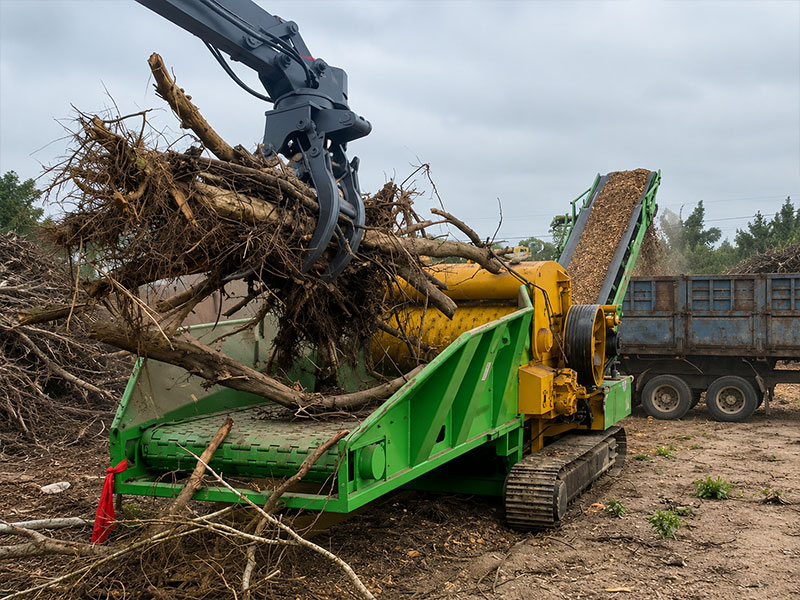
For tree roots, branches, and most green waste, I would usually start with a tub grinder when the feed is bulky, mixed, and irregular. In the WDmachinary range, the WD3600T and WD3600C are built for tree roots, branches, and straw, while the horizontal grinder WD1690 is a better fit when the feed is longer and you want controlled, steady feeding for line production.
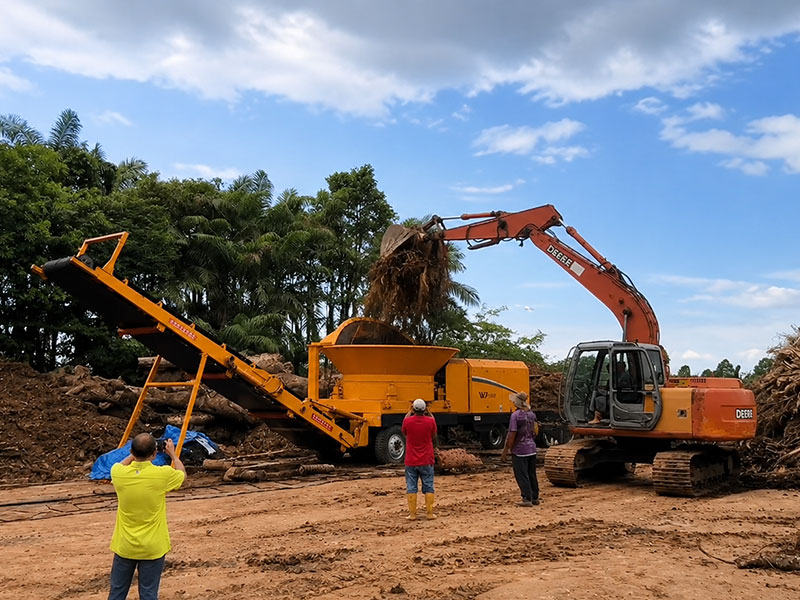
In my work, I do not start with brand talk. I start with material, site, and output target. That is the only safe way to choose a grinder that keeps running and makes money.
Understanding Your Biomass Processing Needs: Roots, Branches, and Green Waste?
Mixed biomass looks similar from far away, but it does not behave the same in the grinder. I learned this early. A machine that handles long branches well may struggle when dirty roots and bulky green waste come in together.
Tree roots, branches, and green waste need different feeding and cutting behavior. Tree roots are dense and often dirty. Branches are long and uneven. Green waste is light, loose, and bulky. That is why the grinder must match the material shape, density, and contamination level, not just the hourly capacity.
When I look at tree roots, I expect shock load, dirt, and uneven feed. When I look at branches, I expect long pieces that can bridge or twist. When I look at green waste, I expect volume more than weight. So I ask three simple questions: How irregular is the feed? How much contamination is there? How often does the material change?
The reference shows that the knife roller assembly is suitable for tree roots, branches, bark, and straw. That gives me a strong clue. It tells me the tub grinder setup is aimed at rough, natural biomass, not only clean wood. The listed raw material for both WD3600T and WD3600C is also tree roots, branches, and straw.That matches common yard waste and land-clearing work well.
Here is how I break it down:
| Material type | Main challenge | Best machine trait | Relevant note |
|---|---|---|---|
| Tree roots | Density, dirt, impact load | Strong rotor and rugged cutting setup | Knife roller fits roots. |
| Branches | Long, springy, uneven feed | Large opening and good grabbing action | Tub grinder suits irregular bulk feed. |
| Green waste | Bulky, light, mixed moisture | High-volume intake and stable feed flow | Large tub helps bulk material intake. |
In simple terms, if your yard handles mixed root balls, brush, and green waste piles, I would lean toward a tub grinder first. If your feed is cleaner and more uniform, then I would think harder about a horizontal grinder.
Tub Grinders vs. Horizontal Grinders: Which One Should You Choose?
Many buyers focus on machine type before they define the job. That is backward. I have seen both tub and horizontal grinders perform very well, but only when the feed style matches the machine.
Choose a tub grinder for bulky, mixed, irregular biomass such as tree roots, branches, and straw. Choose a horizontal grinder when you process relatively long materials like whole trees and very long branches, and when you want more controlled feeding into downstream plants.
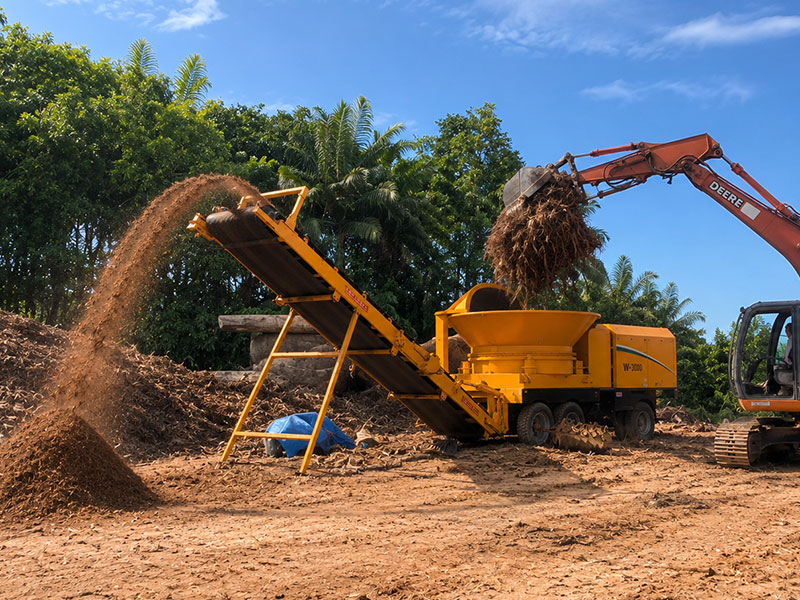
The references give us a useful product split. The Trailer Type Tub Grinder WD3600T and Crawler Type Tub Grinder WD3600C are both positioned for tree roots, branches, and straw. The Horizontal Grinder WD1690 is a separate machine in the line, and related reference text says the horizontal type is suitable for relatively long materials, such as whole trees and very long branches, with output suited to wood-based panel plants, biomass power plants, and pellet plants.
That difference matters a lot in real work. A tub grinder uses a large cylindrical tub. That makes loading easy when the material is loose, tangled, and not pre-sorted. I like that for land-clearing waste and storm cleanup. A horizontal grinder, by contrast, gives a more controlled feed path. That helps when your goal is uniform output for industrial users.
| Machine type | Best use case | Strength | Limitation |
|---|---|---|---|
| Tub grinder | Roots, branches, mixed bulk green waste | Easy loading of bulky irregular feed | Less ideal if you need highly controlled long-piece feeding |
| Horizontal grinder | Whole trees, long branches, line-feeding applications | Better controlled feed and steady output | Mixed bulky root waste may be less convenient to load |
My short answer is this: for the title question, tub grinders win more often for roots and mixed green waste. Horizontal grinders win when branch length is extreme and feed control matters more than rough bulk intake.
Key Technical Specifications to Look for in a High-Efficiency Wood Grinder?
Too many buyers ask only for price and tons per hour. That is a mistake. A grinder can look strong on paper and still cost you money if the feed opening, rotor speed, and service design are weak.
The most important specifications are raw material match, capacity, engine power, inlet size, rotor or spindle speed, cutter setup, fuel use, and tank volumes. For the WD3600 tub grinders, key data includes 25–40 t/h capacity, 408 kW engine power, Ø3600 mm inlet, Ø2350 mm cutting hole, and 850 rpm spindle speed.
When I compare machines, I do not read the brochure top to bottom. I read it in work order. First, can it accept the feed? Second, can it keep throughput stable? Third, can it survive the yard?
The WD3600T specs are strong for bulk wood waste: 25–40 tons per hour capacity, 408 kW engine power, Ø3600 mm inlet size, Ø2350 mm cutting hole, 1370 mm feed tray depth, and 850 rpm spindle speed.The WD3600C carries the same capacity and power class with a 21T machine weight and crawler layout for mobile work.The horizontal grinder WD1690 is also rated at 408 kW, with dimensions 9330 × 2800 × 2990 mm, 23T weight, spindle length 2800 mm, and inlet size 1620 × 640 mm.
| Spec | Why I care | WD3600T | WD3600C | WD1690 |
|---|---|---|---|---|
| Capacity | Tells me expected hourly output | 25–40 t/h | 25–40 t/h | Not stated in reference |
| Engine power | Shows grinding force reserve | 408 kW | 408 kW | 408 kW |
| Inlet size | Decides feed acceptance | Ø3600 mm | Ø3600 mm | 1620 × 640 mm |
| Spindle speed/length | Affects cutting action | 850 rpm | 850 rpm | 2800 mm spindle length |
| Mobility | Affects site flexibility | Trailer | Crawler | Not clear in reference |
I also watch fuel and oil capacity because they affect shift planning. The WD3600T fuel tank is 420 L. The WD3600C fuel tank is 310 L.The WD1690 fuel and hydraulic tanks are both 302 L. These are not small details. They shape uptime.
The Versatility of Knife Roller vs. Hammer Roller Assemblies?
A lot of output quality and machine fit comes down to the rotor assembly. Buyers often skip this. I do not. The cutting system decides what the machine likes to eat.
Knife roller assemblies are better for tree roots, branches, bark, and straw. Hammer roller assemblies are better for biomass materials such as templates, demolition materials, and bark. So if your main feed is roots and branches, the knife roller is the better choice.
This is one of the clearest points in the references. The knife roller assembly is directly listed as suitable for tree roots, branches, bark, and straw. The hammer roller assembly is listed as suitable for templates, demolition materials, and bark.That tells me the knife setup is the default answer for the title question.
There is also useful detail on build quality. The grinder knife roller is described as durable. The blade is wear-resistant. The blade mounting groove uses high-precision machining. The pressure blade plate uses manganese steel plate and is not easy to deform. The bottom cutter seat pressure knife screw hole uses a bushing nut inlay type, which helps later maintenance.
| Assembly type | Best for | Main benefit | My view |
|---|---|---|---|
| Knife roller | Roots, branches, bark, straw | Cleaner cutting for natural woody biomass | Best fit for this article’s main materials |
| Hammer roller | Templates, demolition wood, bark | Better for rough recycled biomass impact work | Better for other waste streams |
If your business is land clearing, orchard removal, branch waste, and green material, I would stay with the knife roller. If you also take demolition waste, then I would consider a hammer setup or a separate line.
Mobility Matters: Trailer-Type vs. Crawler-Type Grinders for Job Sites?
Some yards stay in one place. Some move every week. I have made this mistake before. A good grinder with the wrong chassis can still become a bad investment.
Choose the trailer type for short-distance movement and simpler transport planning. Choose the crawler type when the machine must move frequently around the work yard, because the WD3600C offers a remote-control self-propelled crawler chassis for that purpose.
The WD3600T is a standard trailer type. It can be towed by forklift and is suitable for short-distance movement. It also has a semi-trailer double-towed type that can apply for a vehicle license. That makes sense for yards with defined traffic routes and planned relocation.
The WD3600C is different. It is designed for work sites that need frequent movement. The reference says it has a remote control function and a self-propelled crawler chassis option in the 3600 series. I like this for rough yards, uneven ground, and changing feed stockpiles.
| Mobility type | Best for | Advantage | Product model |
|---|---|---|---|
| Trailer type | Short-distance movement, planned relocation | Simpler towing and transport setup | WD3600T |
| Crawler type | Frequent movement inside the yard | Remote-controlled self-propelled mobility | WD3600C |
If your crew chases material around a large site, crawler saves time. If your machine stays near one loading point, trailer is often enough.
Maximizing Durability: Why Maintenance and Component Quality Count?
A grinder does not fail only because of big parts. It often fails because daily service is hard, wear parts are weak, or feed systems are not built for shock.
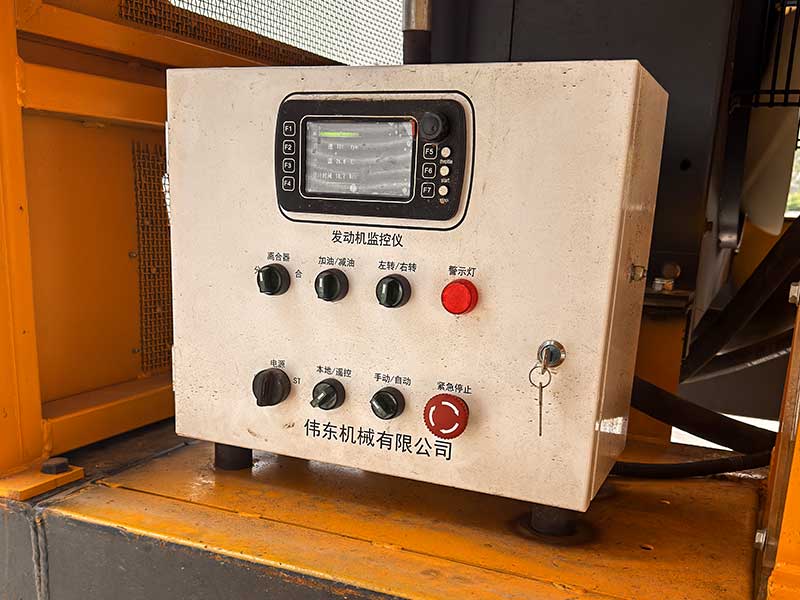
Maintenance access and component quality directly affect uptime. In the references, the workbench can be turned over at 90 degrees for cleaning, the feed system is designed for strong torque and low failure, and key wear areas use manganese steel and durable knife roller construction.
I always tell buyers this: capacity sells the machine, but maintenance keeps the machine. The references give several good signs. First, the workbench can turn over at 90 degrees for cleaning, which makes maintenance easier.That matters in green waste and root work, where stringy build-up can slow the line.
Second, the pressing feeding system uses an overhead hydraulic swing feeding roller and feeding chain. The pressing feeding roller uses a hydraulic cycloidal motor to drive the reducer. The result is strong torque, low failure rate, and minimal maintenance workload. I like this because feed consistency is one of the biggest hidden productivity factors.
Third, the feed chute is welded by manganese steel wear-resistant plate, and the chain uses hook teeth with a large feed opening. That supports rough loading. Then the knife roller details add more confidence: wear-resistant blade, high-precision blade groove, manganese steel pressure blade plate, and maintenance-friendly screw hole design.
| Durability factor | Why it matters |
|---|---|
| 90-degree turnover workbench | Faster cleaning and service |
| Strong hydraulic feeding system | Better torque, lower failure |
| Manganese steel wear parts | Longer wear life |
| Maintenance-friendly knife roller design | Easier long-term upkeep |
From my own experience, buyers remember these details only after the first hard season. I prefer to think about them before the purchase.
Conclusion
For roots, branches, and green waste, I would usually choose a knife-roller tub grinder first, then pick WD3600T or WD3600C by mobility needs, and WD1690 for long, controlled-feed work.