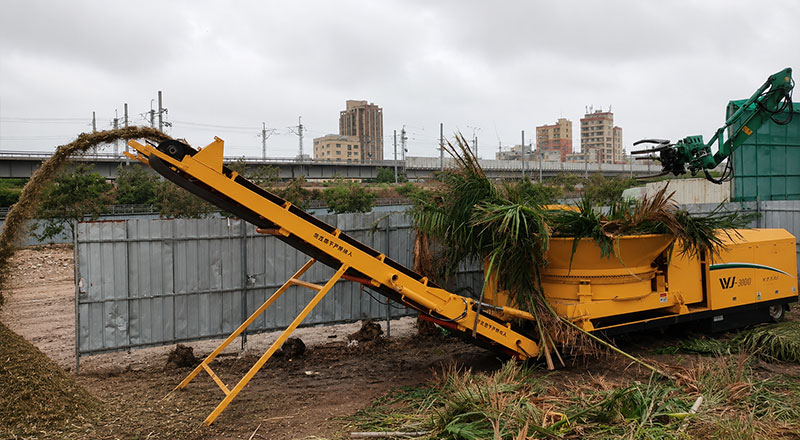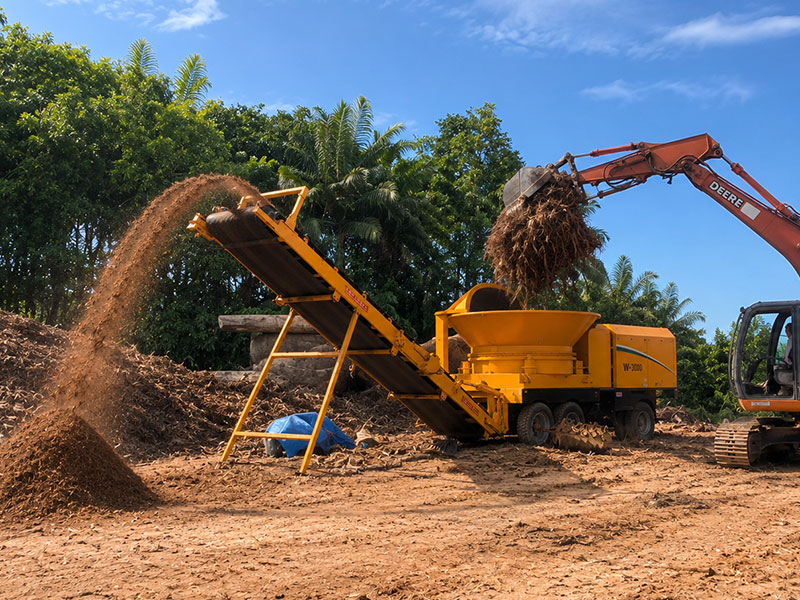
Palm EFB feed characteristics for tub grinder selection should be measured because the same material name can describe very different loads: intact bunch structures, loosened wet fiber, weathered material, or a mixture with fronds, trunks, soil, and foreign objects. Before choosing a rotor, screen, feeding arrangement, or rated machine size, run a five-bucket field check that records material form, moisture condition, dimensions, contamination, and feeding behavior. The check does not replace a controlled machine trial, but it makes the trial reproducible.
Define the sampling boundary
Choose one active pile and record its source, collection date, storage surface, weather exposure, and visible mixture. Do not combine material from different suppliers or storage histories in one result. Mark five sampling positions: two near the surface, two from newly opened interior sections, and one from the lower or older part of the pile where safe access is possible.
Use the loader to expose material. Operators must not enter an unstable pile face or stand beneath raised equipment. Follow the site traffic plan, machine manual, and local safety requirements. If foreign material is visible, apply the receiving and quarantine process described in the feedstock contamination check before continuing.
Record five characteristics for every bucket
| Characteristic | Field record | Engineering question |
|---|---|---|
| Material form | Whole bunch structure, opened bunch, loose fiber, mixed residues | Will material present consistently or bridge above the grinding zone? |
| Moisture condition | Measured sample values, range, pile location, weather and storage notes | Will wet fiber change screen passage, discharge, or required preparation? |
| Dimensions | Typical and maximum length, width, thickness, and long-fiber observations | Can the planned infeed accept and control representative pieces? |
| Contamination | Soil, stone, metal, wire, plastic, and rejected pieces per bucket | What receiving, detection, wear, and safety controls are required? |
| Feeding behavior | Bucket filling, material release, bridging, wrapping, waiting, and spillage | Can the loader and grinder sustain a repeatable cycle? |
Measure condition instead of writing “wet EFB”
Published EFB research often includes drying, washing, cutting, or mechanical grinding before the intended conversion step. That is a reminder that preparation condition matters. For a purchasing or engineering test, use the same moisture measurement procedure for each sample and report the range rather than one convenient number. Include the time between sampling and measurement.
Do not transfer a moisture capability from an unrelated test into a machine guarantee. Fiber length, screen opening, feed rate, material distribution, discharge arrangement, and the desired output also affect behavior. If the pile varies widely, test the difficult condition separately instead of averaging it away.
Use a simple dimensional record
For each bucket, select representative pieces without entering the operating zone. Measure the longest dimension, approximate width, and thickness or compacted depth. Record whether the bunch remains intact or separates during handling. Photograph the piece beside a ruler or marked board.
The maximum representative dimension is more useful for infeed planning than the mathematical average. One unusually long or entangled piece can interrupt an otherwise steady cycle. If pre-cutting is proposed, document the condition before and after that step so its contribution can be evaluated.
Observe loader release and bridging
Fibrous EFB may cling inside a bucket or grapple, release as one large mass, or separate unevenly. Time bucket filling, travel, positioning, unloading, and waiting as separate cycle elements. Note whether the operator must shake the attachment, reposition the load, or pause because the grinder is not ready.
During an authorized machine trial, record bridging, repeated circulation, wrapping indications, screen blinding, uneven discharge, and manual interventions. Stop the test under the approved procedure when unsafe behavior appears. Never reach into an operating infeed or attempt to clear material without the required isolation and lockout process.
Connect the sample result to machine selection
The five-bucket record should be reviewed with the proposed tub grinder configuration, but it should also be used to challenge that choice. A tub may be practical when loading is repeatable and the test shows stable material presentation and discharge. A controlled-feed horizontal machine or pre-shredder may deserve comparison when long fibers repeatedly bridge or when the process requires a more metered infeed. The existing guide to choosing between a tub grinder and horizontal grinder explains the broader configuration decision.
Do not select solely from the residue name. Use the measured characteristics to define the trial setup: feed condition, screen, loading equipment, test time, accepted output, and delay categories.
Five-bucket field sheet
| Bucket | Source position | Material form | Moisture sample | Maximum dimension | Contaminants | Feed/release notes |
|---|---|---|---|---|---|---|
| 1 | Surface A | |||||
| 2 | Surface B | |||||
| 3 | Interior A | |||||
| 4 | Interior B | |||||
| 5 | Lower/older section |
Add a sixth row whenever the source, weather, or material mix changes. Keep photographs and measurement notes with the sheet. A blank field should mean “not measured,” not zero.
Use the result in a controlled trial
Provide the completed sheet, sample photographs, required output specification, loader details, and downstream process to the responsible engineer. Agree on how input or accepted output will be weighed and how operating time will be separated from loader waiting, contamination removal, screen changes, and downstream stoppages.
The commercial palm EFB grinder configuration comparison can be used to organize the wider buying decision. For regional plantation considerations, the palm grinder selection guide adds mobility and support questions.
What to send for an engineering review
- The five-bucket field sheet and dated photographs.
- Measured moisture range and method.
- Typical and maximum material dimensions.
- Contamination types and receiving controls.
- Required output use and acceptable size range.
- Loader or excavator model and attachment.
- Planned operating hours and downstream equipment.
Review the broader biomass application routes or use the engineering contact page to submit the completed record. The selection discussion should be based on representative EFB evidence, not a generic material label.