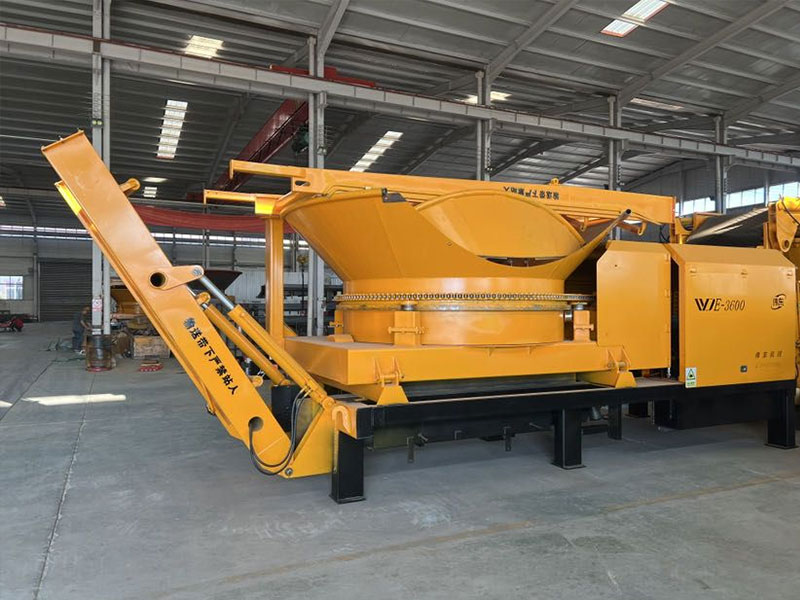
Green waste tub grinder throughput test: change one factor at a time and measure accepted output over gross elapsed time while holding the loader, preparation, wear condition and destination rule constant.
Green-waste throughput is an experimental result, not a machine label. Branch geometry affects presentation, moisture and leafy fines affect handling, and screen selection changes the product boundary. A useful test records these factors without confusing correlation with cause.
Define the response variables
Measure accepted mass or consistently measured volume, gross elapsed time, productive time, oversize, recirculation, rejects and delay minutes. Keep the outlet specification and sampling method unchanged across compared runs.
Create feed-size classes
Record representative and maximum stem diameter, length, forks, crowns, flexible vines and leafy fraction. Do not reduce geometry to an average diameter. The green-waste lot sheet provides a repeatable classification method.
Measure moisture as a method, not an adjective
Use the same sampling location, preparation, instrument or laboratory method and reporting basis. Record rain, storage and drainage. Wet and dry labels without a method cannot support a comparison.
Control screen and wear condition
Identify the installed screen and relevant wear components before each run. Inspect using the exact machine procedure. A smaller opening may alter product and recirculation, but the effect must be observed with the tested material and configuration.
Hold the work cell constant
Use the same loader, operator plan, preparation rule, queue condition, discharge arrangement and delay definitions. Review the tub grinder section for configuration context and request the applicable documentation.
Analyze interactions conservatively
Feed size, moisture and screen may interact, so a single run cannot isolate every cause. Repeat comparable runs, report median and range, preserve raw observations and describe limitations. Send the protocol through the engineering contact page; the buyer capacity framework explains how results enter a purchase comparison.
Use a representative test boundary
Build identified green-waste lots that represent separate geometry classes and moisture conditions from each expected source. Record source, season or weather, storage, branch and stem dimensions, leafy and fibrous fraction, moisture method, soil, stones, wire, plastic and other contamination, preparation, loader, screen identity, wear condition, operator, productive minutes, total elapsed minutes, delay codes, rejects, recirculation, accepted output and samples. Keep photographs with scale references and lot identifiers.
Report both productive and gross rates. Use accepted gross rate = accepted output / total elapsed time, where accepted output meets the written destination and sampling rule. Do not treat everything leaving the conveyor as saleable product. Separate observations, supplier statements, quotations and planning assumptions, and never present one favourable run as universal capacity.
Model variation before releasing a number
Test or model low, expected and difficult cases. Change one major factor at a time where practical: source mix, woody-to-leafy ratio, moisture, contamination class, preparation, loader cycle, screen, discharge arrangement or output rule. State the range and conditions. If a difficult condition cannot be tested, identify the assumption, owner and event that will trigger a retest or production hold.
Include receiving limits, wet-weather access, loader availability, output storage, dispatch windows, inspection and service time. A grinder can be ready while the work cell is stopped by an empty feed queue, a blocked discharge, a full stockpile or a rejected product. Capacity belongs to the complete material system, not only to the rotor.
Build a practical measurement sheet
Give every observation a lot ID, clock time, measurement unit, observer, instrument or estimation method and note. Record the start and stop definitions before the trial. For mass, identify the scale and ticket basis; for volume, describe the container or surveyed pile method and acknowledge changes in bulk density. For moisture, record the sampling and reporting method. Keep original readings instead of entering only a calculated average.
Use delay codes that a second reviewer can understand: waiting for prepared feed, loader unavailable, contamination inspection, oversize preparation, material bridging, output handling, pile change, adjustment, sampling, planned service, safety stop and other documented cause. A delay is not automatically a machine fault, but it remains part of gross project time when it occurs within the defined operating window. Review the largest recurring constraint before considering a larger grinder.
Present results in a table with lot description, configuration, accepted-output rule, productive rate, gross rate, accepted yield, range and limitation. Add photographs of incoming material, setup and output samples. A reviewer should be able to reconstruct why two runs differ without relying on memory or sales language.
Before approval, ask operations, maintenance, safety, product quality and purchasing to review only the boundaries they understand. Record unresolved evidence instead of converting uncertainty into a precise number. Retain the worksheet with the quotation and note when a material, screen, loader or destination change makes it obsolete.
Control abnormal conditions and changes
Stop for suspected metal or large stone, bridging, smoke, abnormal heat, unusual noise or vibration, damaged guarding, blocked discharge, lost communication or material outside the approved feed envelope. Clearing, internal inspection and servicing must follow the exact machine hazardous-energy procedure and applicable law. OSHA’s control of hazardous energy standard is a general reference for work where unexpected startup or stored energy can injure people.
Repeat the baseline after a meaningful change in source, preparation, moisture condition, screen, wear condition, loader, layout, operating method or destination rule. Keep revision numbers for the material file, trial sheet and quotation. This prevents a capacity value from being reused outside the conditions that produced it.
Controlled-test report
Publish each run as a row with lot, geometry, moisture method, screen, wear state, loader, preparation, gross time, productive time, delays, accepted output and samples. Only compare rows whose boundaries match, and do not extrapolate beyond the tested envelope.