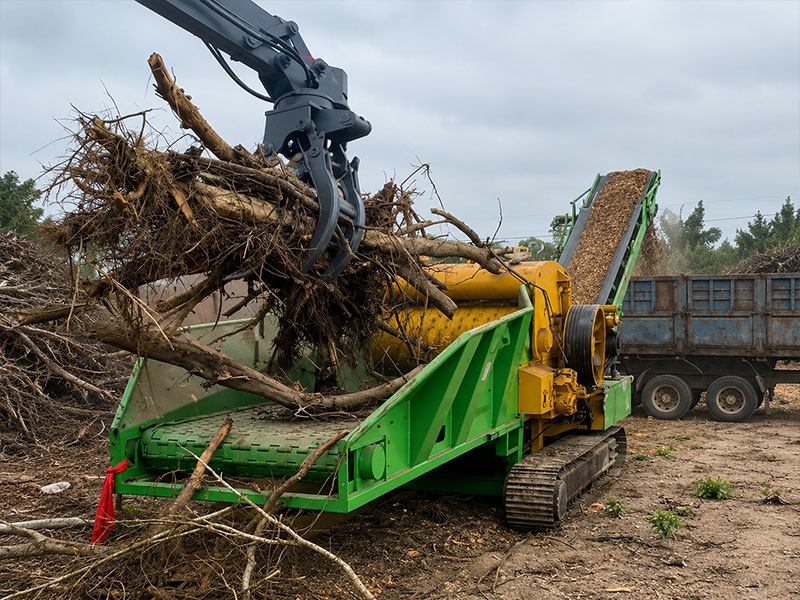
Logging slash horizontal grinder throughput depends on feed size, moisture and screen choice together. These variables change loading, machine response and the fraction a buyer will accept. A controlled trial makes the interaction visible before a production target is written into a contract. The method below is a field worksheet, not a promise of tonnes per hour for any model.
Set the test question
A logging slash horizontal grinder throughput test should answer a specific purchasing question: how much accepted product can the proposed line deliver from the buyer’s own slash mix? State whether the target is biomass fuel, mulch, compost feed or another outlet. Record the receiver’s size, moisture and contamination rules before selecting a screen. A rate measured on clean straight wood is not evidence for a pile of branchy, soil-bearing slash. Use a written test sheet so each supplier receives the same material description and measurement rule.
Sample the slash pile
Split the inventory into representative lots: long limbs, branchy tops, needles or foliage, bark, fines and any dirt-bearing material. Record approximate size ranges, the share of each lot and how it will be loaded. Flag wire, stones, metal and unacceptable roots before the trial. Note whether material is fresh, dried in the field, rained on or stored under cover. An average description such as forestry waste conceals the variation that changes feed presentation and output. Keep an excluded-material ledger so the test denominator does not quietly include rejected tonnes.
Measure moisture without guessing
Take material samples from more than the exposed surface. Label the lot and sampling time, and use the buyer’s accepted moisture method or a suitable laboratory method. When a pile contains wet foliage and drier stems, report the range and proportion instead of one convenient number. Moisture affects mass, flow and outlet acceptance; a wet tonne and a dry tonne are not interchangeable for fuel planning. Do not present a moisture correction as a predictable production increase. Compare trial results on a stated wet or dry basis and preserve the raw measurements.
Define the size entering the grinder
Record maximum limb diameter, length, branch spread and the loader’s presentation method. A long branchy piece can consume feeding time even when its stem diameter is within the opening. Document whether slash is pre-cut, bundled or sorted and include that labor in project economics. The whole-tree feed measurement guide gives a related intake method, but slash needs its own branch and foliage observations. Use photographs with scale and a count of difficult pieces to help the engineer interpret the test.
Compare screen settings fairly
Ask the supplier to identify the screen aperture and actual installed configuration for each run. Hold the feed lot, loader and sampling window as consistent as possible while changing the screen. A smaller aperture may change recirculation, fines and accepted yield. Do not assume a nominal hole dimension is the final product size; irregular particles require sampling and sieving under the receiver rule. Record any screen change time and cleaning required. The decision should balance accepted output, rework and handling rather than select the highest instantaneous machine rate.
Time the entire work cycle
Record start, stop, feed, idle, clearing and output-dispatch intervals with a reason for each interruption. Weigh or otherwise measure eligible input and accepted output using a documented method. If truck queues or loader availability cap the line, report that limitation. A short period of continuous feeding is useful for equipment observation but should not be projected as a full shift without adjustment. The whole-tree trial protocol shows how to separate machine behavior from work-window availability; apply the same discipline to slash.
Inspect the output and losses
Take output samples at several points during the run, not only after a favorable minute. Record oversize, fines, contaminants and material sent back through the line. State the mass or volume basis for each fraction. Count reprocessed material once as new accepted supply. Note dust or wet clumping if it affects storage and loading. The receiver may reject a visually uniform pile for moisture or contamination, so obtain its acceptance decision where possible. Keep photos and sealed reference samples under the buyer’s quality procedure.
Run more than one feed scenario
Test a clean dry lot and a representative difficult lot if supply variation warrants it. The objective is to establish a planning range, not a single heroic number. Separate feed effects from operator learning and screen changes. Describe what would happen if the mix shifts toward wet tops or oversized limbs during the season. A lower-case accepted-output estimate can protect truck, storage and contract planning. Avoid transferring a result from another site without comparing material, loader, screen and work window.
Turn results into a specification
Summarize eligible feed per hour, accepted product per work hour, rejection fraction, screen setting, moisture basis, interruptions and support equipment. Attach the raw log and sampling method to the quotation request. Ask the supplier to confirm the model, wear provisions, service access and safe feed limits for this mix. The horizontal grinder product selection is only a starting point; the delivered configuration must be checked against the trial. A horizontal wood grinder overview can orient the buyer across the equipment family.
Make the next decision explicit
If oversize dominates, inspect screen choice and feed preparation before requesting a bigger motor. If wet material clumps, review storage, moisture handling and discharge. If the loader is the constraint, plan a repeat trial with a consistent loading cycle. Record the specific uncertainty each new trial will resolve. Send the feed mix, outlet rule, site access and results through the contact page for an engineering review. The final throughput claim should always name the material, screen, operator support and accepted-output rule.