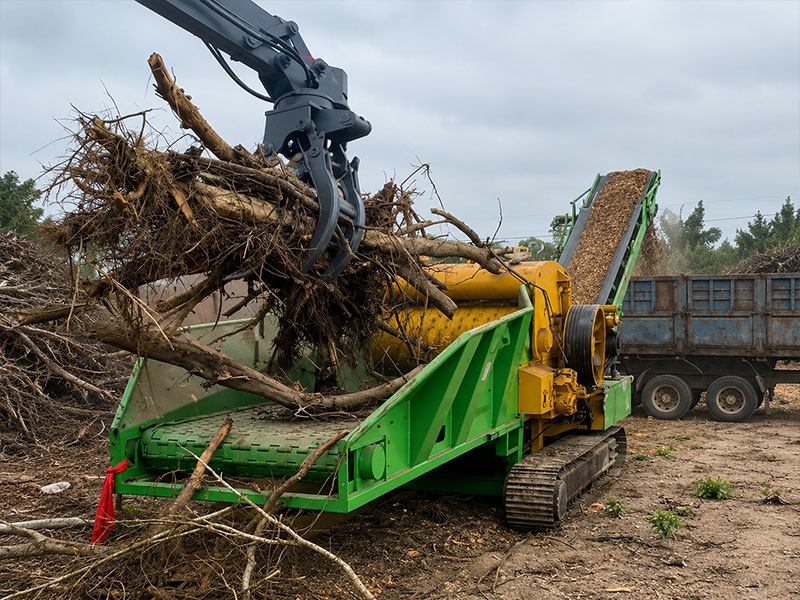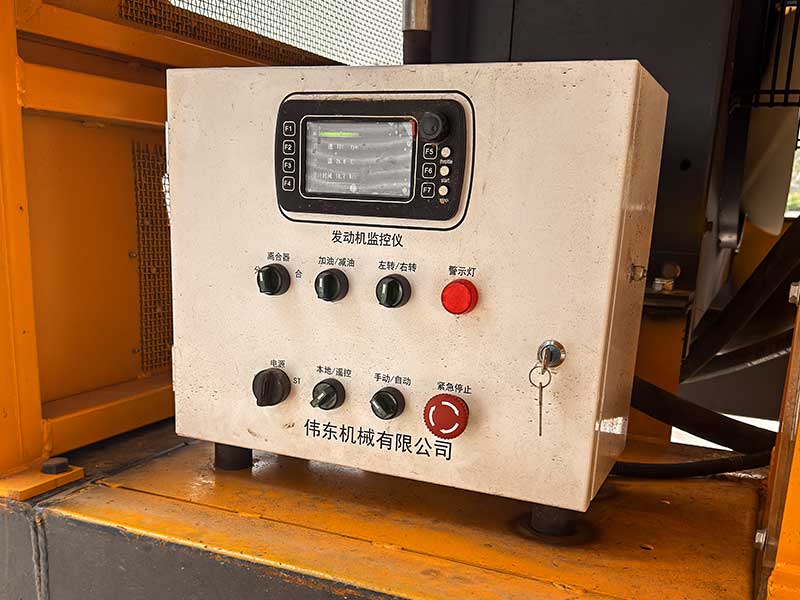
Whole trees feed characteristics for a horizontal grinder should be measured by material class before a trial. The term whole tree can hide very different feed: straight stems, forked stems, broad crowns, leafy branches and soil-bearing roots. Their shape, contamination and moisture can change feeding, machine response and accepted output. Treating all of them as one test lot makes a quoted rate difficult to reproduce.
This field method separates incoming material, machine settings, work time and product acceptance. It does not supply a universal hourly capacity or authorize feeding a piece that exceeds the delivered model’s rules. Use the manufacturer’s instructions and the site’s safety procedure to decide what may enter the machine and who may inspect it.
Define the lot before measuring it
Give each source lot a unique identifier and record the harvest or collection area, date, storage period and any preprocessing. Keep trunks, crowns and roots separate if they arrive separately. If a mixed load cannot be separated, document the visible proportions and treat uncertainty as part of the result. Photograph a representative set beside a scale reference rather than relying on a single attractive log.
Record the intended outlet and its acceptance criteria at the same time. For biomass fuel or further processing, the receiver may specify particle distribution, moisture reporting, contaminants and sampling. Without that rule, a machine can appear productive while producing material the customer will not accept. The tub versus horizontal grinder comparison frames the equipment choice; the lot sheet makes it testable.
Measure geometry as a distribution
For straight stems, record length and diameter ranges, not only the largest item. For forked stems and crowns, record the widest projection, branch density, curvature and any section that must be trimmed or reoriented. Note how much of the delivered mass is in each class. A maximum diameter alone does not describe how a broad crown can be presented to a controlled horizontal feed path.
Record the loader type, grip method and planned orientation. Measure or estimate the time needed for trimming, turning and clearing the staging area. Keep this preparation time separate from active grinding but inside the complete job time. The same machine can show a different gross site rate when the loader must sort and orient difficult trees. The capacity factors guide is useful background; the trial sheet should capture the actual contribution of each factor.
Document moisture and contamination honestly
Record whether material is fresh, weathered or mixed, and describe how moisture samples will be taken. If a measured moisture value is required, label the sampling location and method; do not assign one percentage to the entire lot from appearance. Moisture may vary between bark, stem and leafy crown. Note rain exposure and storage surface because they can change both weight and feed behavior.
Inspect for soil, stones, wire, metal, fencing, plastic and unknown treated wood. Root balls deserve separate attention because attached mineral material can change wear and product suitability. Isolate uncertain loads under the receiving procedure. A grinder trial is not a method for proving that contaminated feed is safe to process. The roots and branches guide offers a related material distinction.
Set a trial matrix that isolates one change
Agree on a small set of representative runs: for example straight stems, then forked stems, then a documented mixed lot. Use the same operator, loader and output handling arrangement where practical. Record the exact machine configuration, size-control setting and any adjustment before each run. When a setting changes, start a new row. Do not combine runs with different settings into one capacity figure.
For each row, record incoming new material, reprocessed oversize, active grinding time, gross elapsed time, stoppages, reason for each stop, output quantity, oversize and receiver-accepted quantity. Count recycled oversize as machine feed for utilization analysis but not as new harvested supply. Report both the machine rate during active operation and accepted output over the full work window. The latter is usually the more relevant project measure.
Observe feed behavior without unsafe intervention
Use positions and observation methods allowed by the site plan. Record hesitation at the infeed, repeated orientation work, unusual sound, visible discharge restrictions and any change in output. If a hazard or abnormal machine response appears, use the approved stop and isolation procedure and involve authorized staff. No result is worth reaching into a feed path or bypassing guarding to preserve a test run.
After a stop, record the lot and machine state before changing several variables. A problem seen only with soil-rich roots has a different interpretation from one repeated on clean stems. Avoid assigning a component failure from one symptom without inspection. If one feed class remains outside the machine’s approved envelope, document the required preprocessing or separate route rather than forcing it through the trial.
Close the result with receiver acceptance
Sample output according to the receiver’s method and retain the lot linkage. Document particle distribution, visible contamination, moisture result where measured, oversize and rejected quantity. A change in size-control setting may improve one criterion while reducing another; record the tradeoff. Do not describe all discharged material as usable biomass before the receiver has assessed it.
Use the horizontal grinder product range only to identify configurations for a supplier discussion. Ask for the exact delivered-model feed limits, service access and trial setup. A horizontal wood grinder overview can help align terminology across the project team, but the signed test record should settle the application decision.
Issue a concise engineering report
Attach the lot photographs, geometry table, preparation notes, machine settings, time log and accepted-output summary. State which runs are representative of normal supply and which were edge cases. Identify unresolved material classes and the next test needed. Send the report through the engineering contact page for a configuration review. The report should let another team repeat the test boundary, not merely admire a peak throughput number.