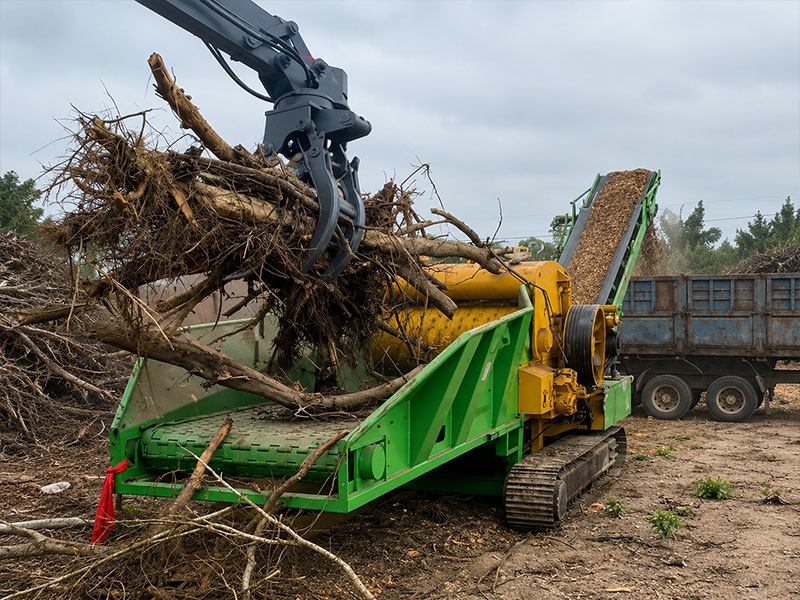
Horizontal grinder inspection intervals for whole trees are a maintenance planning problem. Stem shape, roots, soil and operating pattern change the condition the crew sees. This field-note gives an inspection and record structure for engineering teams. It does not prescribe a universal service hour or override the specific model manual and site lockout procedure.
Make the interval a site decision
Horizontal grinder inspection intervals for whole trees should follow the delivered model manual, service conditions and actual feed, not a universal hour count from an article. A clean stem lot, branchy crowns and soil-bearing roots expose different components and demand different observations. Build an interval sheet that identifies what the crew checks before a shift, during planned stops and after a representative amount of work. Record the serial number, installed wear parts, screen and feed lot beside each check.
Inspect before startup
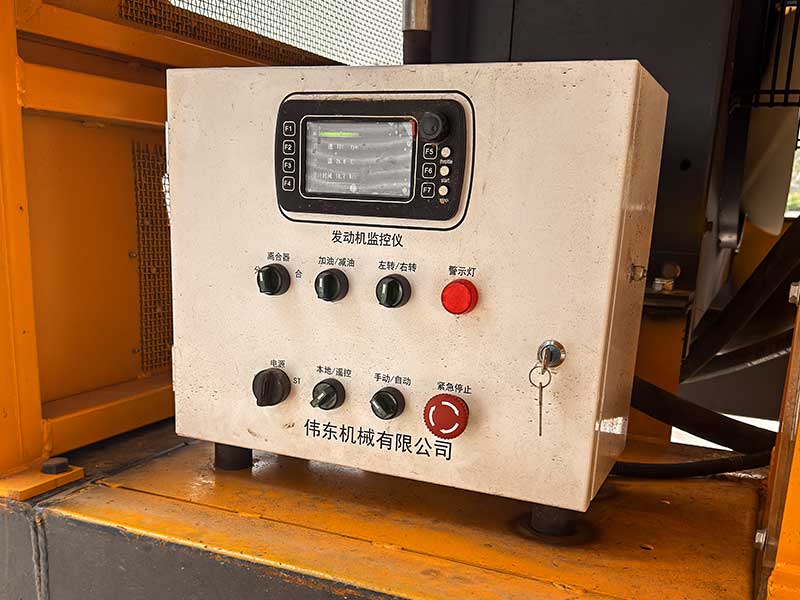
With the machine in its prescribed safe state, check guards, emergency stops, access doors, fire provisions, leaks and obvious damage. Confirm the infeed, discharge and service areas are clear. Check the loader and support equipment too; an unavailable loader can look like grinder downtime in a production log. Follow the manufacturer checklist and site lockout rule. Document any defect and the person authorized to release the machine. Do not begin a trial to see whether a known safety fault matters.
Track feed contamination
Record soil, stones, wire, metal and dirty roots found at the receiving point. Even if a piece is rejected before feeding, its frequency tells the maintenance planner whether the incoming material has changed. When a contamination incident reaches the machine, inspect according to the manual and do not wait for the next ordinary interval. Keep the incident separate from normal wear so replacement estimates remain useful. The whole-tree feeding protocol establishes the earlier hold point.
Check wear components against condition
Inspect cutting or grinding elements, fasteners, anvils and other wear surfaces identified for the model. Compare observations with the manual’s limits and the prior inspection record. Photograph repeated positions to see a trend. Do not infer a remaining-life percentage from one visual glance or substitute a generic threshold. Soil-rich material may accelerate wear in a way a clean demonstration did not show. Record the exact part and feed condition when replacement or adjustment occurs.
Watch infeed and discharge
Check the infeed belt or chain, rollers, guards and discharge equipment according to the supplied procedure. Uneven tracking, unexpected vibration or changed noise should trigger investigation by trained staff. A discharge blockage can affect both output quality and safe access. Inspect only in the machine state the manual requires. Note whether the observed issue is in the grinder, loader, conveyor or output vehicle; a single downtime category hides the useful cause.
Use planned stops for cleaning and checks
Schedule inspections within the site work window and record their actual duration. Cleaning accumulated fines or wet material may prevent a later stoppage, but it also occupies real time. Do not omit it from capacity estimates. State which tasks require shutdown, isolation or specialist service. If a recurring blockage appears after a feed or screen change, investigate that condition rather than simply shortening every interval. The whole-tree trial method helps connect machine setting with stoppage records.
Keep a parts and service ledger
For each service event, record date, operating hours if available, feed lot, part number, observed condition, action, labor and downtime. Separate scheduled replacement, unexpected damage and consumables. Use purchase records for costs, and retain removed parts when a failure needs analysis. This ledger can support a site-specific spare stock and interval review. The wear-part cost guide explains why accepted output and exceptional incidents should be tracked separately.
Review intervals after a feed change
When the project shifts from straight stems to dirty roots or wet crowns, make an early condition check and compare it with the baseline. The aim is to detect a new failure pattern, not to assume every new lot needs a permanent schedule change. If wear is stable, document that evidence. If damage repeats, investigate source sorting, screen, feed method and part choice with the supplier. Have a qualified technician approve changes to the maintenance plan.
Measure the effect on production
Report available hours, planned inspection time, unexpected downtime and receiver-accepted output for the same period. A longer planned inspection can be valuable if it prevents damage, but the conclusion needs recorded evidence. Do not present machine uptime alone as project output. Note truck and loader waits separately. This lets the team decide whether the next improvement is maintenance, feed preparation or support equipment rather than assigning every slow day to the grinder.
Keep handover instructions precise
At the end of a shift, mark completed checks, open defects, held feed lots and any temporary operating restriction. The incoming operator should be able to see which inspection is next and which person may release the machine after repair. Attach a photograph or part number when words such as worn or loose could be interpreted differently. If a repair cannot be completed, record the safe machine state and do not transfer an informal promise to watch it. A clear handover prevents the service history from being lost between crews.
Close the loop with the supplier
Send repeated findings, photographs, part IDs, feed descriptions and logs to the model supplier. Ask for the applicable manual section and model-specific inspection thresholds. The horizontal grinder product range gives configuration context, while a horizontal wood grinder overview frames the family. Use the engineering contact page to request a review. Update the interval sheet only after the new method is documented and the crew is trained.