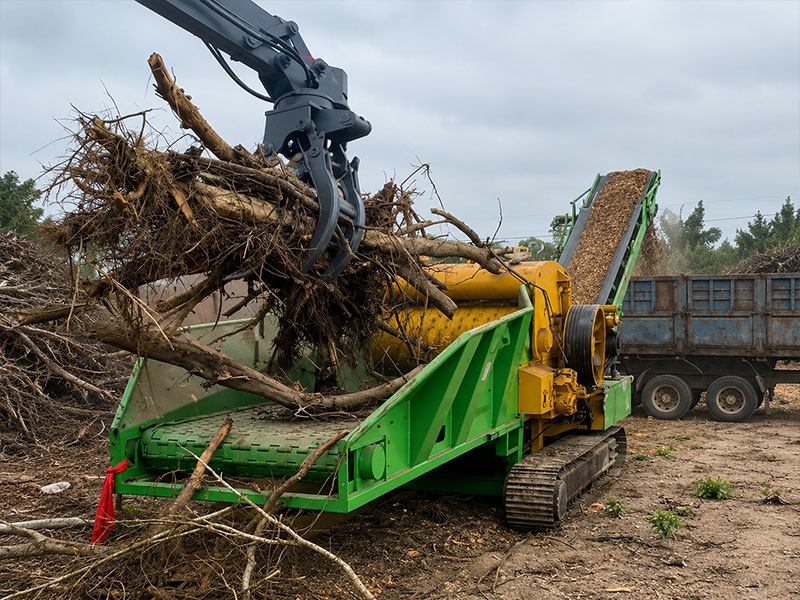
Safe feeding whole trees into a horizontal grinder is a controlled site workflow. Long stems, branchy crowns and dirty roots need different inspection and handling. The steps below help an engineering team document the feed, loader routes, communication and shutdown rules before a production test. They do not replace the manufacturer manual, site risk assessment or trained supervision.
Characterize trees before they enter the work zone
Safe feeding whole trees into a horizontal grinder starts with a feed inventory and a site plan. Record stem diameter and length ranges, crowns, forks, roots and any material that still carries soil. Flag wire, nails, stones and metal from fencing or collection equipment. Separate unknown loads for inspection. A whole-tree label is not a safe feed specification. The whole-tree measurement worksheet can organize this inventory, while the delivered model manual sets its actual feed limits.
Set a clear acceptance lane
Create a receiving lane where the operator can inspect and sort material before the loader crosses into the grinder zone. Use visible hold and reject areas with a record of why a load was set aside. Keep pedestrians, delivery drivers and unrelated traffic outside the machine working envelope. Mark a safe route for loaded vehicles and a separate path for product removal. The loader operator should not have to choose between visibility of the feed opening and awareness of an approaching truck.
Remove contamination at the earliest point
Inspect root balls and dirty butts for soil, stones and metal. Use only the approved detection or separation equipment for the site. Do not rely on the rotor or downstream magnet to solve every contaminant risk. Record the source of each rejected item to improve collection practice. A piece that could damage equipment may also become a projectile or affect product quality. Recheck the mix when the harvesting crew, collection area or weather changes.
Prepare difficult crowns and forks
Branches can bridge, spring or rotate during loader presentation. Identify oversized or tangled pieces before lifting and use a safe preparation method approved for the site. Avoid cutting solely to improve a trial number without counting that work. Record the preparation time and resulting feed dimensions. The goal is a repeatable loading cycle within the machine and attachment limits. Never pull material by hand near the feed path or ask a spotter to stand inside the exclusion zone.
Define loader communication
Assign one trained operator to control each relevant machine and agree on stop, restart and emergency signals. Use a radio or clear visual system suited to the noise and sightlines. The grinder operator should be able to stop feeding when a suspect piece appears. Establish who may authorize restart after a hold. If the loader also manages output piles, coordinate that change of duty before movement. A consistent crew procedure prevents the pressure to keep the hopper full from overriding an inspection decision.
Load within the documented envelope
Confirm the proposed horizontal grinder model, infeed dimensions, controls, guarding and manufacturer instructions. Position the loader so it can place the stem or crown steadily without striking guards or forcing a jam. Avoid dropping a tree from an uncontrolled height. Feed orientation and spacing should match the model procedure, not a generic article. Observe whether long pieces swing toward people or vehicles. Stop and reassess when the actual feed differs from the approved trial mix.
Protect discharge and transport
Set the discharge direction and exclusion area before startup. Keep trucks and loaders out of the line of ejected material as specified by the equipment and site procedure. Confirm the product pile, conveyor and truck plan can receive output without crossing the feed route. Do not allow a full output area to force unsafe repositioning. The whole-tree trial protocol helps record output conditions, but safe traffic separation must be designed into the work layout first.
Handle jams with a written shutdown
A jam, unexpected vibration, noise or metal indication requires the site’s stop and isolation procedure. Train operators on the model-specific lockout and clearing method. Never reach into the infeed or remove guards while energy is present. Record the material and cause after safe clearing so the receiving and preparation plan can improve. If jams recur for one lot, remove that lot from normal feeding pending review instead of treating repeated interventions as ordinary operating time.
Check the work window and shift handover
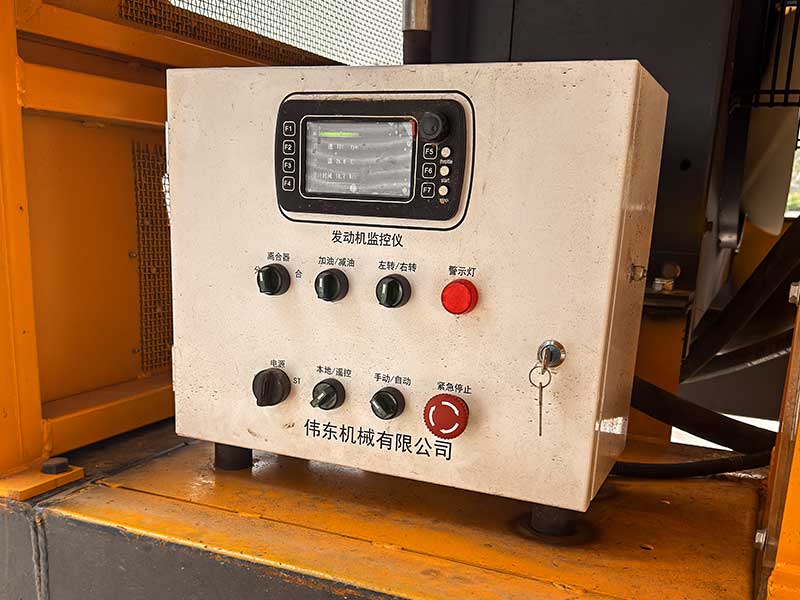
Perform pre-start checks and document the condition of guards, controls, wear components, fire provisions and clean access. During handover, identify held loads, unusual contamination, changed output requirements and any maintenance issue. Keep the hold register available to the next crew. If weather changes footing or visibility, reassess the loader route and shutdown criteria. Production targets should use only the hours left after these checks and normal service are included.
Review near misses and held material at a regular crew meeting. A rejected wire-bearing stem is useful evidence, not a nuisance to conceal. Record whether the source, inspection position or communication method needs to change. Keep the corrective action and its owner in the shift log so a new crew does not repeat the same exposure.
Turn observations into a controlled trial
Measure eligible input and receiver-accepted output only after the safe workflow is established. Record preparation, loader cycles, stops and rejected material along with the machine setting. Ask the supplier to review the exact configuration and site layout. The horizontal grinder product page frames model choices; a horizontal wood grinder overview provides wider category context. Send the tree mix, contamination record and work-zone plan through the project contact page before assuming any equipment is suitable.