Author: Micheal (Senior Sales Manager at WD Machinary)
Operating heavy-duty industrial wood crushers requires advanced safety systems designed to protect equipment operators and ground crews from high-velocity flying debris and high-torque mechanical hazards. To ensure maximum site security, procurement managers must evaluate essential engineering safeguards such as remote control operation, emergency e-stop networks, specialized impact-resistant debris curtains, and automated tramp metal detection. Utilizing robust machinery like our WD series optimizes project safety parameters by integrating intelligent mechanical overrides that instantly neutralize operational hazards before they cause severe workplace injury or catastrophic component destruction. Ultimately, prioritizing advanced safety features during your machinery selection process preserves human capital, eliminates liability exposures, and maintains consistent, profitable uptime for your commercial recycling or land-clearing business.
Introduction
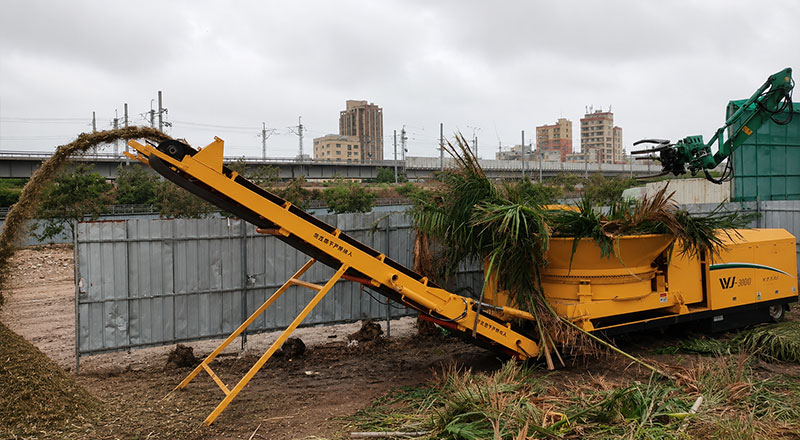
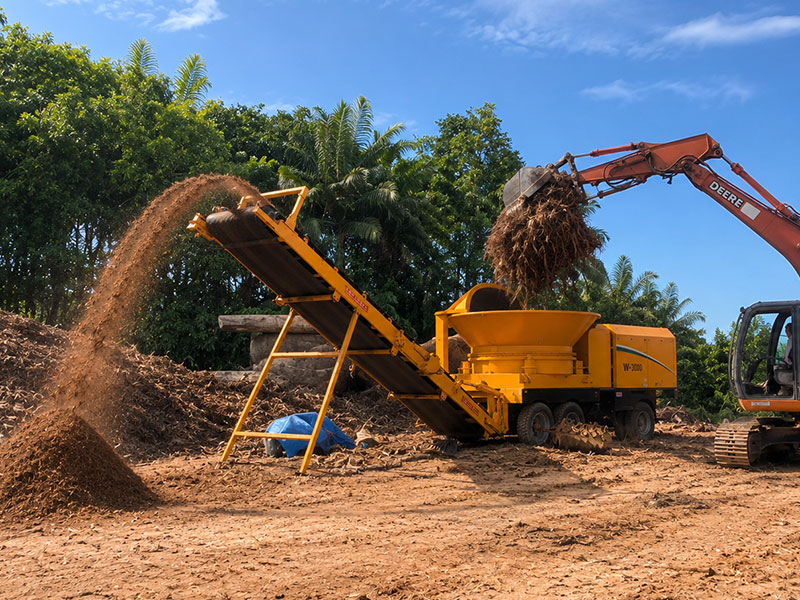
When business owners and project engineers approach me at WD Machinary to discuss adding a new high-capacity wood crusher or tub grinder to their fleet, the discussion almost always kicks off with production metrics. They want to talk about engine horsepower, hourly tonnage capacity, and how fast our WD3600 or WD1690 systems can process massive industrial logs and stubborn stumps. But as a sales manager who has spent decades on active forestry sites, industrial recycling yards, and biomass plantations, I always pause the conversation to bring up an even more critical metric: operator safety.
Heavy-duty wood crushers generate immense kinetic forces. Inside the machine, a multi-ton rotor spinning at high RPMs uses tungsten carbide teeth to pulverize massive chunks of wood. At these energy levels, an unmanaged mechanical hazard or a split-second operator error can result in catastrophic workplace injuries, severe structural damage, or millions of dollars in legal liability.
Safety isn’t just an afterthought or a legal compliance checkmark—it is a foundational pillar of operational profitability. A safe site is a productive site. In this technical guide, we will analyze the non-negotiable safety features you must look for when buying a heavy-duty wood crusher to protect your crew and secure your capital investment.
1. Debris Containment: Thrown Object Protection Systems (TOPS)
By the very nature of the crushing process, wood fragments, root sections, and hidden stones can occasionally bounce out of the grinding chamber. Controlling the trajectory of these projectiles is critical for ground crew safety.
The Tub Grinder Challenge: Heavy-Duty Tub Covers
Tub grinders utilize a wide, open-top rotating hopper fed by gravity. Because the top is open to receive massive stumps, there is a risk of material being ejected upward if a hammer strikes an unyielding knot or root ball at an odd angle. To counter this, premium units offer specialized hydraulic tub covers or heavy-duty deflector shields. These steel covers can be positioned over the active grinding zone during high-torque processing to catch flying debris and redirect it safely downward into the mill.
The Horizontal Grinder Solution: Weighted Debris Curtains
Horizontal grinders use a enclosed feed table structure, but material can still attempt to back-fire out of the intake hopper. Look for machines equipped with multi-layered, heavy-duty rubber or steel-reinforced debris curtains hanging directly in front of the upper feed compression roller. These weighted curtains act as a one-way security valve, allowing large logs to feed smoothly inward while blocking high-velocity wood shards from escaping backward toward your support equipment.
2. Remote Control Operation and Proximity Awareness
The safest place for an industrial equipment operator to be during a high-speed crushing cycle is completely outside the hazard zone.
Full-Function Wireless Remote Systems
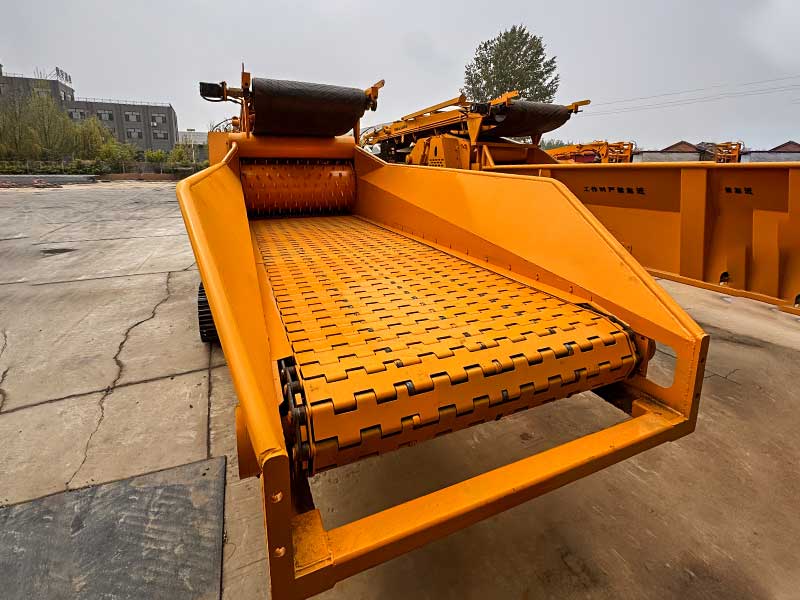
Modern heavy-duty crushers should always be equipped with industrial-grade wireless radio remote control systems. This allows the primary operator—whether they are sitting in the climate-controlled cab of a feeding excavator or standing a safe distance away on the ground—to control every single function of the machine. The operator can start or reverse the feed table, adjust tub rotation speed, raise or lower the discharge conveyor, and trigger emergency shutdowns from up to 100 meters away, well clear of any dust clouds or flying debris hazards.
Perimeter E-Stop Networks
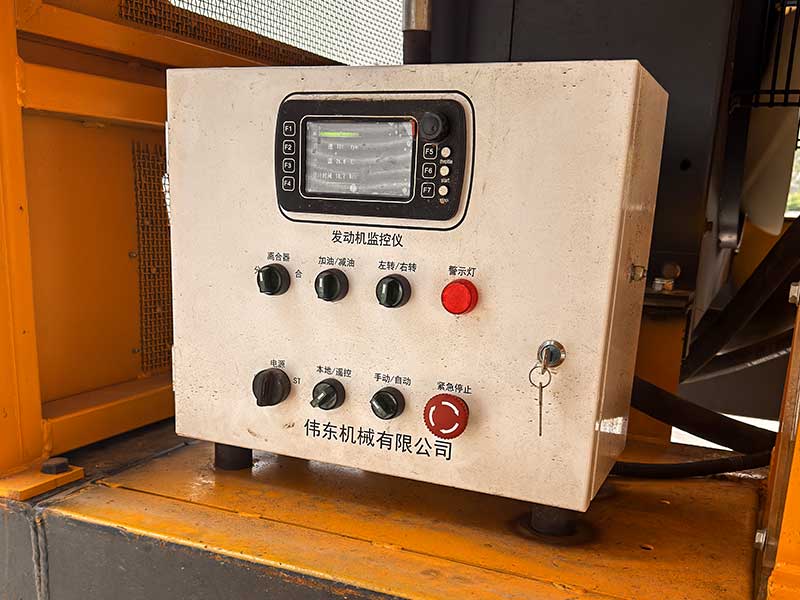
While wireless remotes are excellent, you must also have physical, foolproof redundancies built onto the machine’s frame. Look for a crusher that features a comprehensive network of bright red, highly visible Emergency Stop (E-Stop) buttons located at every major corner of the chassis: near the engine bay, beside the hydraulic control panels, and along the feed tracks. This ensures that any ground spotter or maintenance technician can instantly kill all engine power and mechanical rotation within a fraction of a second if a hazard is spotted on-site.
3. Advanced Safety Features Comparison Matrix
To give your safety directors and procurement team a clear evaluation checklist when reviewing machinery specifications, use this structural comparison table:
| Essential Safety Feature | Primary Hazard Mitigated | Mechanical Mechanism | Operational Benefit |
|---|---|---|---|
| Hydraulic Tub Covers / Shields | Thrown debris, vertical projectile ejection | Heavy steel deflector plates deployed over the hopper | Protects surrounding loaders and ground personnel |
| Wireless Radio Remote Control | Operator exposure to dust, noise, and flying debris | Long-range digital frequency control transmitter | Moves operator to a secure, high-visibility vantage point |
| Tramp Metal Detection Systems | Catastrophic rotor failure, explosive metal sparks | Electronic coil monitoring combined with instant feed reverse | Prevents internal mill damage and potential yard fires |
| Mechanical Rotor Locking Pins | Accidental rotor rotation during maintenance checks | Heavy steel pin physically locking the flywheel | Eliminates crushing hazards during tooth replacement |
| Automated Fire Suppression | Engine bay thermal events, dry wood dust combustion | Thermal sensors linked to pressurized dry-chemical nozzles | Protects high-value capital assets from total fire loss |
4. Tramp Metal Detection and Rotor Protection
One of the greatest dangers on a commercial wood recycling site is the introduction of “tramp metal”—unprocessible objects like heavy steel engine blocks, excavator teeth, thick chains, or railroad ties hidden inside piles of wood waste.
The Explosive Risk of Unmonitored Impact
When a spinning hammermill rotor strikes a massive piece of unyielding steel, the results can be explosive. The impact can shatter tungsten carbide cutting tips, bend heavy hammer rods, and send jagged metal fragments tearing through the sizing screens, transforming them into lethal shrapnel. Furthermore, the extreme friction can generate massive streams of white-hot sparks that can instantly ignite dry wood dust, causing a catastrophic fire inside the machine or across your storage yard.
The Optimization Solution: Smart Detection Systems
Our premium WD Machinary configurations incorporate intelligent tramp metal detection systems. An array of electronic sensors continually monitors the vibration profile and magnetic signature of the material passing under the feed roller. If a foreign metallic object or an abnormal high-G impact spike is detected, the system reacts in milliseconds—instantly stopping the feed conveyor, reversing the intake system to back the metal away from the mill, and dropping engine RPMs to idle before structural damage can occur.
5. Maintenance Safety: Mechanical Interlocks and Access Protection
Statistically, many industrial machinery accidents occur not during active production, but during routine maintenance operations when crews are changing wear parts or clearing blockages.
Hydraulic Enclosure Hood Interlocks
To service the hammers, teeth, and sizing screens, technicians must physically enter the grinding chamber enclosure. Look for machines engineered with dual mechanical and hydraulic interlock systems. These systems ensure that the heavy access hoods cannot be hydraulically opened unless the engine is completely shut down and the master electrical isolator is turned off.
Mechanical Rotor Locking Pins
Even when an engine is turned off, a massive, balanced grinding rotor possesses high residual inertia and can easily rotate if a technician applies weight to a hammer while replacing a tooth. This sudden movement can trap or crush fingers and hands against the interior wear walls or sizing screens. A non-negotiable safety feature is a dedicated, heavy-duty steel Rotor Locking Pin that physically inserts through the machine frame into the rotor flywheel, mechanical blocking any potential rotation while your crew is inside the chamber.
Micheal’s Summary: The True Cost of Cutting Corners on Safety
When you are reviewing machinery quotes from different manufacturers, it can be tempting to choose a lower-priced model that stripped out advanced wireless controls, tramp metal detection sensors, or automated fire suppression systems to hit a cheaper price point. But as I always tell my B2B clients: “If you think safety features are expensive, try calculating the cost of an accident.”
A single serious injury or a total fire loss due to poor engineering safeguards can permanently shut down your business, cancel your insurance policies, and destroy your commercial reputation. Investing in a premium crusher from WD Machines means you are buying peace of mind, knowing that your team is protected by the most advanced, battle-tested engineering safeguards in the heavy equipment industry.
Secure Your Worksite with WD Machinary
At WD Machinary, we build our industrial equipment to deliver elite production capacity without ever compromising on human safety. From our robust structural steel chassis designs to our intelligent, lightning-fast electronic override systems, every element of our machinery is engineered to ensure your crew returns home safely at the end of every shift.
Do you want to review our detailed safety manuals, watch video demonstrations of our emergency override systems, or get a customized machinery quote?
Explore our global industrial platform at www.wdmachinary.com or reach out to me, Micheal, directly today. Let me know your specific site conditions, your material contamination risks, and your local safety regulations, and I will help you select the perfectly configured, high-safety wood crusher designed to maximize your processing yield while keeping your worksite completely secure!