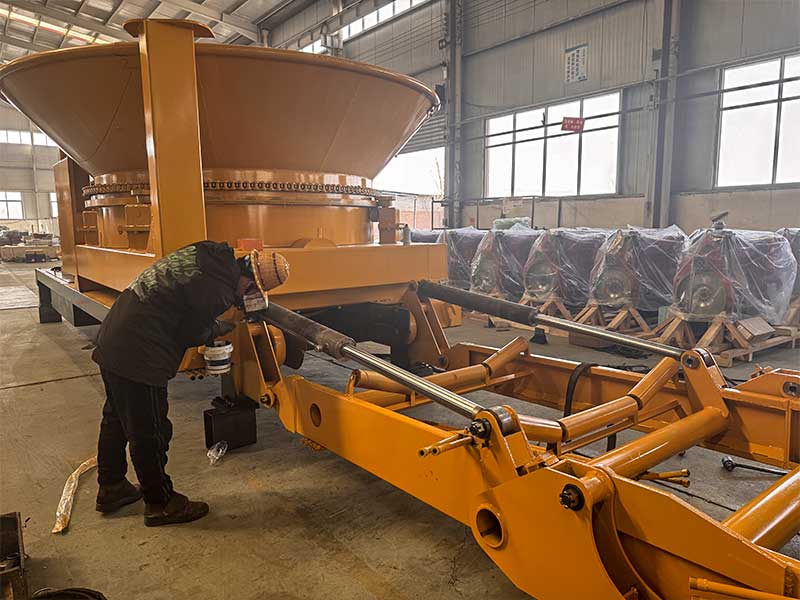
Safe feeding municipal woody waste into tub grinder operations depends on a clear handoff between receiving and processing. A municipal site may need to manage arrivals while an operating team handles released material. Those parallel duties can create pressure to clear a load or resume feeding before uncertainty has been resolved. The operating plan should say who can hold material, who can stop feeding and who owns the next decision.
This field note is for the supervisor coordinating those responsibilities. It addresses material status and exception handling, not a specific machine operating procedure. Feeding methods, communications, restricted access, hazardous-energy control and restart requirements must follow the actual equipment instructions and approved site assessment.

Keep receiving acceptance distinct from feeding permission
A received load may still require preparation or further assessment. Preserve the distinction between received, held, released for preparation and released for grinding. Do not allow a collection schedule or a storage concern to turn a provisional load into approved feed.
The municipal feed-profile sheet describes the material assumed in equipment selection. The operating handoff should identify whether the current batch matches that description and what has changed. If it does not match, assign the reassessment rather than leaving the loader operator to infer acceptance.
Coordinate collection work with the processing boundary
Use the approved traffic and access arrangements to distinguish incoming collections from controlled processing activity. Confirm which personnel handle receiving questions and which communicate with the grinder operator. A receiving dispute should have an escalation route that does not require someone to approach operating equipment.
Record how support resources are assigned when several tasks need attention. Do not assume that the person receiving trucks is simultaneously available for feed coordination or output handling. Conflicting priorities need a named supervisor and a documented decision process.
Use an exception handoff matrix
| Observed situation | Immediate decision category | Owner of the next assessment |
|---|---|---|
| Source or contents unresolved | Hold material under the receiving process. | Authorized receiving or material-assessment personnel. |
| Required preparation incomplete | Do not release the batch as equivalent feed. | Preparation lead and release authority. |
| Feed identity lost during transfer | Resolve status before continued use. | Supervisor responsible for material traceability. |
| Abnormal operating condition | Apply the authorized operating stop procedure. | Operator and designated technical assessment personnel. |
| Inspection or intervention required | Apply approved isolation and access procedures. | Authorized maintenance personnel. |
| Return to operation proposed | Use the documented restart and release requirements. | Designated return-to-service and operating authorities. |
This table identifies categories, not executable emergency instructions. The site must connect them to its approved procedures and competent personnel. Do not improvise a clearing or restart method from a general article.
Give stop authority an unambiguous meaning
Personnel assigned to relevant operating or material-control duties should know how to communicate a concern under the site procedure. Record who makes a stop or hold decision and how others acknowledge it. Avoid a situation in which one team assumes that another has already resolved the condition.
A stop is not permission to intervene. Stationary-looking machinery can retain hazardous energy. Guard removal, inspection requiring access, obstruction clearing and other interventions must use the authorized isolation and verification process. Do not reach into feeding or processing areas to resolve a suspected inclusion.
Keep contamination assessment upstream
Record foreign-material observations and unresolved source information through the receiving process. Protective equipment has configuration-specific capabilities and limitations; it does not establish universal permission to feed unknown material. Do not assume grinding will correct an unacceptable input.
The municipal receiving decision checklist supports the upstream assessment. Its purpose differs from this operating handoff: the checklist records acceptance evidence, while the handoff establishes how that decision reaches the people controlling the feed sequence.
Retain interruption causes without blaming capacity
Record when feeding is interrupted and the decision category responsible. Separate held loads, preparation delays, unavailable support, output handling and machinery assessment. These events can have different corrective actions even when all appear as lost processing time.
The municipal throughput-test method distinguishes active processing from full-period accepted output. Keep the operating record consistent with those boundaries. Do not remove material-control interruptions from a report and present the resulting segment as the performance of the complete municipal service.
Review changed sources before they become routine
A new collection stream, a different preparation method or an unusual woody mixture can alter the operating assumptions. Retain the changed-condition notice, assessment and release decision. Do not treat repetition of an unreviewed exception as evidence that the exception is acceptable.
Discuss configuration requirements through the tub grinder product page. If a horizontal wood grinder is proposed, apply the same source and output criteria while obtaining its own operating requirements. The alternative architecture does not remove receiving, isolation or traceability duties.
Close an exception with evidence and a clear handoff
Keep the original observation, assessment owner, disposition and any authorized maintenance or return-to-service record together. Confirm who has accepted the resolution. A load moved out of sight or an interruption no longer visible is not evidence that the underlying question was resolved.
Use the application and service contact to discuss the source profile and unresolved equipment questions. A practical municipal feeding-control plan gives uncertainty a place to stop and a person responsible for assessing it. That protects the integrity of the operating handoff without pretending that a general checklist can substitute for machine-specific safety procedures.