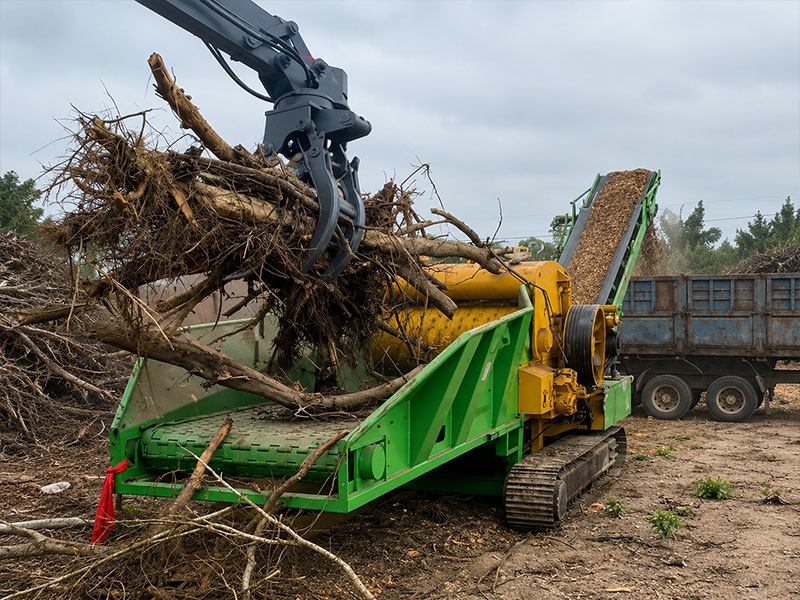
Logging slash feed characteristics for a horizontal grinder should be measured before model selection. Slash is a mix of limbs, crowns, bark and foliage with variable moisture and possible contaminants. This engineering field-note shows how to describe the material, loader and outlet so a supplier can design a representative trial. It does not provide universal capacity or feed limits.
Define the slash streams
Logging slash feed characteristics for a horizontal grinder are not captured by a single average branch diameter. Separate long limbs, crowns, tops, bark, needles or leaves and any soil-bearing material. Note whether whole-tree sections appear in the same pile. A model that performs well on straight wood may face different loading and screening behavior with tangled crowns. The engineering selection request should describe the proportions of these streams and how consistently they arrive.
Measure physical dimensions
Record representative maximum length, limb diameter, branch spread, forks and bundle size. Use photographs with a scale and count difficult pieces. The nominal machine opening only addresses part of the question: loader grip, orientation and safe presentation may be the limiting step. Ask the supplier for the offered model’s feed limits and a trial on the actual material. The whole-tree feed measurement method is a related starting point, but logging slash needs a specific branch-entanglement note.
Measure density and quantity honestly
Use truck tickets or sampled loads where possible. Loose slash piles contain air voids, so outside pile dimensions are not solid wood volume. If a conversion from loose volume to mass is needed, derive it from representative weighed loads and state the moisture condition. Keep the range of daily delivery, not only annual total. A supplier cannot size a line credibly without knowing whether feed arrives continuously or in bursts after harvest.
Record moisture and storage
Sample more than the pile surface, labeling the source and date. Fresh tops, rain-wet foliage and field-dried limbs can differ materially. State whether reported tonnes are wet or dry and whether the receiver has a moisture limit. Moisture can influence flow, mass and product acceptance; do not assign a universal production change without a trial. Describe storage time and drainage so the supplier understands the likely range of conditions.
Identify contamination routes
List soil, stone, wire, metal and treated or unsuitable wood risks by source. Roadside clearing may carry different hazards from a clean harvest landing. Establish a receiving hold and reject fraction. Do not expect a downstream magnet to protect every upstream component. Ask about detection, feed preparation and model-specific protective features, then verify their location in the proposed configuration. Record the rejected quantity so the eligible feed forecast remains realistic.
Check loader presentation
Observe how the intended loader untangles, lifts, inspects and orients slash. Time several normal cycles and identify when a piece must be cut or repositioned. If the loader also clears output, document that duty. A grinder with a large feed opening cannot compensate for a loader that cannot maintain a controlled cycle. The safe feeding workflow provides related work-zone controls; adapt the traffic and communication plan to smaller, springy slash.
Connect screen to outlet
Obtain the receiver’s particle, fines, moisture and contamination specification. A biomass fuel buyer may evaluate slash differently from a mulch or compost feed buyer. Ask the supplier to identify screen, operating setup and sampling method used in its trial. Oversize returned for a second pass should not count as new material. The logging-slash throughput trial guide explains how feed size, moisture and screen setting can be compared under a controlled test.
Capture practical work hours
Map site access, permitted hours, truck arrivals, inspection, service and output removal. A high short-run rate is not the same as receiver-accepted output over a shift. Report how much eligible material must be processed in available hours and show a low-workday case. If a mobile route has several landings, include every move and setup. The feed specification should state the intended site pattern so the supplier can propose an appropriate chassis and support plan.
Run a representative selection trial
Provide at least a clean and a difficult lot if the project mix warrants it. Record material, moisture, loader, screen, interruptions, eligible input and accepted output. Keep the photos and raw tickets. Hold variables steady where possible and label any unavoidable differences. The purpose is to select a configuration that meets the real outlet and work window, not to generate a peak number from the easiest pile. Ask for the exact model limits in the quote.
Preserve uncertainty in the feed sheet
Where the project has only a roadside pile survey, show which quantities are estimates and which come from weighed deliveries. Give the survey date and the number of loads or sample points. State whether future harvest areas will have the same species, collection method and storage time. If the mix is likely to change, request a configuration that can be reviewed under a second trial rather than treating the first sample as permanent. A supplier can respond more usefully to a documented range than to an exact-looking but unsupported average. Retain the raw photos and tickets alongside the summary.
Write a clear purchase specification
Summarize source, proportions, dimensions, moisture range, contamination holds, delivery pattern, loader and product rule. Distinguish measured facts from forecasts. The horizontal grinder range can start equipment review; a horizontal wood grinder overview gives category context. Send the feed sheet and trial questions through the engineering contact page. Update the specification when the harvest plan or receiver changes.