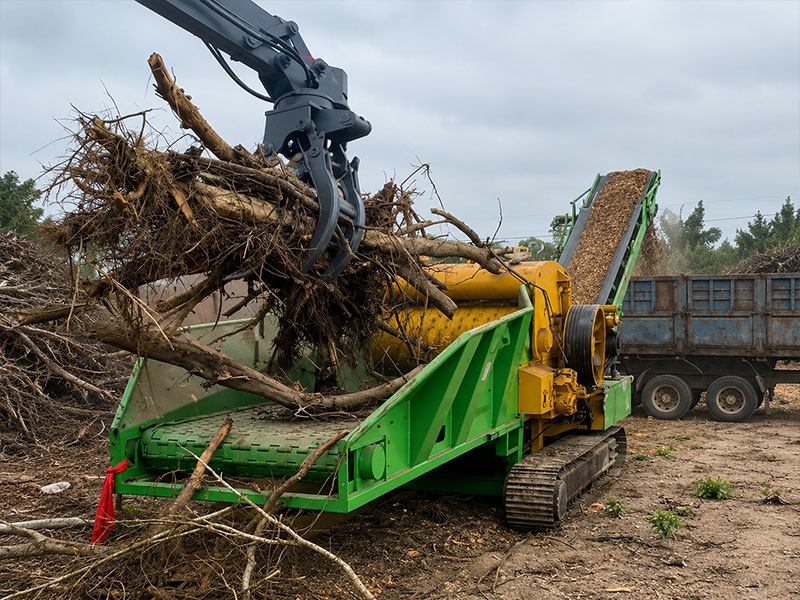
A whole trees horizontal grinder throughput test is meaningful only when the feed class, moisture condition and size-control setting are recorded with the output. A clean straight stem can move through a horizontal infeed differently from a forked crown or damp mixed tops. A smaller screen opening may change both particle distribution and the time spent processing. The project should test these variables deliberately, not quote one peak hour as the rate for every whole-tree load.
This method compares runs on the same delivered machine with a stated operator, loader and receiver rule. It does not provide a fixed rate or a safe feed dimension. Confirm the machine’s approved material envelope, adjustment procedure and stop controls in the manual before the trial.
Set the accepted-output rule first
Ask the biomass receiver for particle distribution, oversize, contamination and moisture reporting requirements. Agree on sample locations and how rejected product will be counted. Report machine discharge and accepted product separately. If one setting produces more material but a larger rejected fraction, the headline discharge rate may mislead the buyer.
Record the receiving destination and whether screening, further grinding or blending is permitted. A trial result should state which operations are inside the boundary. The whole-tree feed characteristics sheet supplies the lot description needed here; this article focuses on controlled changes during the machine test.
Build three feed classes from normal supply
Select representative straight stems, forked stems or crowns, and a documented mixed lot. Separate soil-bearing roots or contaminated pieces unless the supplier has approved a distinct test route. For each class, record source, dimensions, visible bark and foliage, storage condition and any trimming or sorting. Weigh or consistently measure the amount presented to the loader.
Keep the proportion of each class visible. A trial that uses mostly easy stems while ordinary supply is mostly crowns cannot support the proposed duty. Label unusually difficult pieces as edge cases; include them, but do not let one outlier silently define the whole campaign. The roots and branches comparison explains why irregular pieces need their own assessment.
Measure moisture instead of guessing
Choose a sampling method before work begins and take samples from the lot rather than one attractive piece. Record sample position, time, storage history and weather. If laboratory or meter results are unavailable, describe the condition without assigning a numerical moisture value. Keep fresh and weathered material in separate rows.
Moisture can change weight, handling, discharge and receiver acceptance. Comparing tonnes per hour across wet and dry lots without recording their condition confuses material mass with processing behavior. If a buyer needs a dry-mass basis, agree on the calculation and measurement method with the receiver. Do not invent a conversion factor from appearance.
Change one size-control variable at a time
Confirm the screen or other size-control options approved for the machine. Plan a baseline run, then a second run using one changed setting on comparable feed. Record the installed parts, inspection condition and any adjustment. If the operator also changes feed class or loader technique, the two runs cannot isolate the effect of the size setting.
Allow for safe shutdown and isolation during a change, and record that time separately. Never bypass guarding or ask for an adjustment while equipment is moving. Compare output samples using the receiver’s agreed method. The horizontal grinder range identifies candidate equipment; only the exact delivered configuration and supplier instructions establish which screen changes are available.
Time the entire work cycle
For every run, record start and end, active grinding, loader waiting, feed orientation, stoppages, cleaning, discharge waiting and sampling. Count new feed separately from oversize sent through again. Measure output by the same unit across runs and report the method. If scale data are unavailable, state that the result is a volume estimate and avoid converting it to mass with an unverified density.
Calculate an active machine rate and an accepted-output rate over gross elapsed time. The second includes ordinary operational delays and is usually closer to the project’s scheduling question. Record crew size and support vehicles so another team understands the conditions behind the result. The capacity factors guide explains why the whole line can limit the result even when the rotor is available.
Watch for interaction effects
A wetter crown may require more orientation work than a dry stem; a different screen may change discharge handling. When two factors change together, label the run exploratory rather than attributing the full difference to one cause. Repeat the most decision-relevant comparison on another representative lot if the first result could be dominated by unusual material.
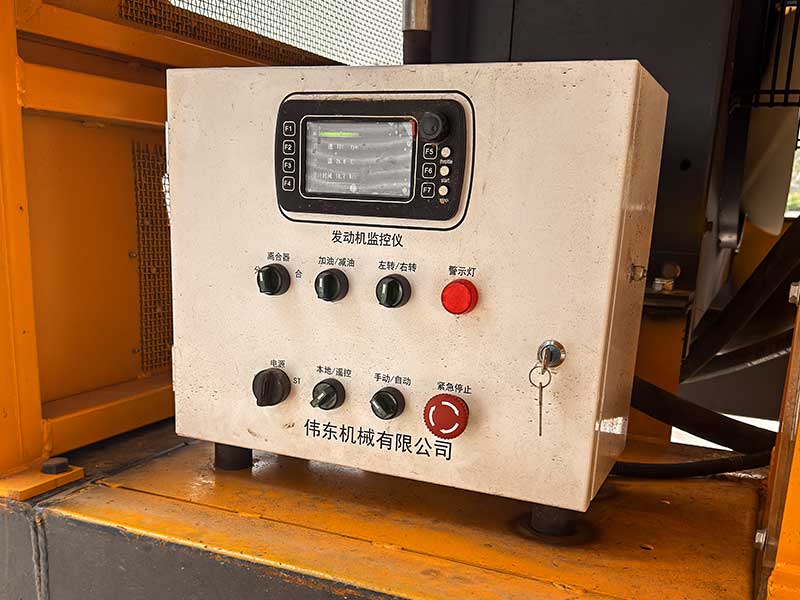
Log abnormal sound, vibration, heat indication, bridging or discharge restriction with the exact lot and setting. Use the site stop and isolation procedure for investigation. A production trial should not normalize unsafe intervention to achieve a better number. If the feed is outside approved limits, record the exclusion and required preparation rather than force a run.
Report a range with its conditions
Summarize accepted output, particle results, active time, gross time and interruption causes for each feed class and setting. State which observations are repeated and which are single-run indications. Keep the raw log and sample photos attached. Do not present a precise annual capacity based on one short demonstration.
If another feeding category is under consideration, apply the same receiver and timing boundary to a horizontal wood grinder comparison; changing the equipment label does not remove the need for a representative trial. Send the lot sheet, settings, time log and acceptance summary through the engineering contact page. A useful throughput figure is reproducible because its material and measurement conditions are visible.